About 325 minutes
Contraband — Key Ideas to Explore
Fantasy Juvenile Worlds
74,572 recorded words. 15 minutes difference from this book's estimate.
View Gutenberg source #72066
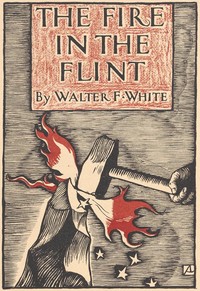
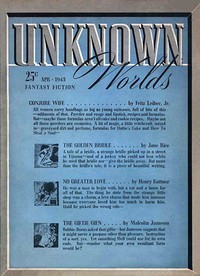
Before opening The fire in the flint — Context and Discussion, the edition data offers a quick orientation: 78,179 words, 5 hr 40 min estimated reading time, and 24 detected text sections.
The text analysis averages about 16.4 words per sentence, while the detected sections provide another way to judge how the source is divided.
Project Gutenberg metadata also associates the work with “Bildungsromans,” connecting these edition facts with the source record’s subject description.
Explore this collection
These alternatives are selected using recorded categories and estimated reading time.
About 325 minutes
Fantasy Juvenile Worlds
74,572 recorded words. 15 minutes difference from this book's estimate.
View Gutenberg source #72066About 324 minutes
Fantasy Juvenile Worlds
74,425 recorded words. 16 minutes difference from this book's estimate.
View Gutenberg source #73414About 361 minutes
Fantasy Juvenile Worlds
82,826 recorded words. 21 minutes difference from this book's estimate.
View Gutenberg source #69655Search stored excerpts and compare books → Choose by your preferences →
Choices use stored catalog measurements. Estimates vary with reading speed. A shared category is a catalog label, not a claim that two books have the same argument or literary quality.
Search reads excerpt text stored with this catalog and links to its associated Gutenberg record. The connection is stored in the site database; this tool does not recheck that every excerpt is word-for-word identical to that external record. Excerpt search does not cover every chapter and does not verify historical publication dates.
Catalog snapshot checked: 2026-09-25. Coverage: 100 public books, 100 available source excerpts.
Read the complete public-domain text at its original source.
Read on Project GutenbergThe novel opens with Dr. Kenneth Harper fussing over his new office—adjusting an examining table, wiping dust from glass shelves, and testing a microscope with a stamp. This meticulous, almost obsessive attention to equipment establishes a character who believes in order and progress. Yet the narrative voice soon pivots: a cigar-chewing judge bluntly describes the South's system of lynching as a cover for consensual affairs, admitting what is publicly denied. The prose moves from clinical precision to raw, colloquial exchange, signaling a tension between professional aspiration and the brutal realities Kenneth must confront.
The first chapter’s language is tactile and possessive: Kenneth “fondled” instruments, “adjusted and readjusted” the screen, and “ran his hand over” the card index. These verbs convey a man who controls his environment through physical mastery. But when the judge enters, the prose sheds its polish. The judge’s speech is marked by contractions (“ain’t,” “mebbe”), repetition (“I wouldn’t be too sure”), and a weary cadence that contrasts with Kenneth’s eager interruptions. The shift is not just thematic but rhythmic—the narrator adopts the judge’s vernacular, embedding the reader in the very constraints the judge describes.
White builds tension through what is not said. Kenneth hesitates to press the judge further, “thinking it expedient to shift the conversation away from such dangerous ground.” The judge, in turn, lists topics that cannot be discussed—religion, politics, the Democratic ticket—without social ruin. The dialogue circles a central silence: the gap between private knowledge and public denial. The judge’s phrase “that’s the hell of it, Ken” lands with the force of a verdict, and the narrative lingers on the impossibility of organizing dissent. The pace slows here, weighted by the judge’s cumulative evidence of a system that punishes decency.
White’s narrator does not soften the judge’s admissions. The judge states that “nine out of ten cases” of alleged rape are false, and that lynching serves to “hush the matter up.” This is not reported as rumor but as “common knowledge in the South.” The narrative voice remains steady, refusing euphemism. Yet it also withholds judgment of Kenneth’s naivete—his plan to “enlist the support of every white man” is met not with mockery but with the judge’s weary repetition. The effect is a layered realism: the reader sees both the idealist’s hope and the pragmatist’s despair, held in unresolved tension.
Readers should attend to how White uses physical detail—a cigar chewed to mangled appearance, a stamp under a lens—to anchor abstract conflict in sensory experience. The novel’s early pages establish a rhythm of aspiration and obstruction that may persist throughout. Note also the judge’s role as a truth-teller who cannot act; his voice may echo in later confrontations. The excerpts offer no resolution, only the stark geometry of a system that isolates both its victims and its reluctant critics.
That rain made the Georgia heat in The Fire in the Flint feel almost unbearable, the way Harper’s careful hands clashed with the town’s blunt terrors. Afterwards, restless, I picked up The tenderfoots — A Reader’s Guide, and found a quieter kind of unease—not lynching, but the slow distance between people who think they understand each other. Both left me staring out the window.
Use these questions to collect your thoughts before moving on.