About 388 minutes
The "Canary" murder case — Story, Setting & Ideas
Fantasy Juvenile Worlds
89,224 recorded words. 23 minutes difference from this book's estimate.
View Gutenberg source #70788
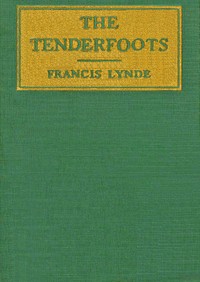
Before opening The tenderfoots — A Reader’s Guide, the edition data offers a quick orientation: 94,440 words, 6 hr 51 min estimated reading time, and 33 detected text sections.
The text analysis averages about 17.3 words per sentence, while the detected sections provide another way to judge how the source is divided.
Project Gutenberg metadata also associates the work with “Male friendship -- Fiction,” connecting these edition facts with the source record’s subject description.
Explore this collection
These alternatives are selected using recorded categories and estimated reading time.
About 388 minutes
Fantasy Juvenile Worlds
89,224 recorded words. 23 minutes difference from this book's estimate.
View Gutenberg source #70788About 444 minutes
Fantasy Juvenile Worlds
102,047 recorded words. 33 minutes difference from this book's estimate.
View Gutenberg source #71152About 364 minutes
Fantasy Juvenile Worlds
83,537 recorded words. 47 minutes difference from this book's estimate.
View Gutenberg source #70815Search stored excerpts and compare books → Choose by your preferences →
Choices use stored catalog measurements. Estimates vary with reading speed. A shared category is a catalog label, not a claim that two books have the same argument or literary quality.
Search reads excerpt text stored with this catalog and links to its associated Gutenberg record. The connection is stored in the site database; this tool does not recheck that every excerpt is word-for-word identical to that external record. Excerpt search does not cover every chapter and does not verify historical publication dates.
Catalog snapshot checked: 2026-09-25. Coverage: 100 public books, 100 available source excerpts.
Read the complete public-domain text at its original source.
Read on Project GutenbergThe narrative voice in The Tenderfoots is split between two contrasting registers. Philip Trask, the New England protagonist, thinks in measured, self-conscious prose: he notes the "backward-wheeling plain" and his own "belated homesickness" with a detachment that borders on melancholy. Harry Bromley, by contrast, speaks in quick, ironic bursts—calling Philip's conscience a "rain-coat" and dismissing his guilt as "commonplace asininity." This vocal contrast drives the novel's early rhythm, as Bromley's breezy Philadelphian energy pulls against Trask's brooding reserve.
The excerpts show a story that moves in fits and starts. Long passages of interior reflection—Philip cataloguing the prairie's monotony or replaying his own shame—are punctuated by sudden bursts of action: a night in a saloon, a returned letter stamped "Uncalled for," a search for rental apartments. The pacing mirrors the characters' own uncertainty, lurching between stasis and forward motion.
The novel's opening establishes Philip Trask's voice as one of careful observation and self-doubt. He describes the prairie in terms of absence—"nothing but the treeless, limitless plain"—and his own situation as a "plain quest of bread." His language is precise, almost academic, fitting a man who regrets an unfinished college course. When Bromley enters, the prose snaps into a different key: shorter sentences, colloquial idioms, and a willingness to laugh at Philip's earnestness. Bromley's speech is full of quick judgments and playful metaphors—"you'll get dry rot"—while Philip's replies are hesitant, often trailing into ellipsis or self-correction.
This vocal contrast is not merely decorative. It structures the narrative's emotional arc. Philip's interior monologues are dense with moral weight; Bromley's dialogue deflates that weight with humor. The reader is left to judge which voice is more reliable. The excerpts do not resolve this tension, but they make clear that the novel's interest lies less in plot than in the friction between these two ways of seeing the world.
The excerpts reveal a story that alternates between static description and restless movement. Early chapters linger on the train journey: Philip watches the "shack-built prairie towns" and "sod houses" slide past, his attention fixed on the monotony. Later, in Denver, the pace shifts to a series of small, inconclusive actions—writing a note, visiting rental agencies, waiting for a reply. The returned letter, stamped "Uncalled for," becomes a pivot point, after which Philip grows "moody and at times almost irritable."
Bromley, by contrast, is always in motion: making acquaintances, accepting invitations, dragging Philip toward social life. His restlessness creates a counter-rhythm to Philip's inertia. The novel's pacing, then, is not uniform but dialogic—a push-and-pull between the urge to act and the paralysis of reflection. The excerpts give no indication of a major event in the first third of the book; instead, they build tension through the accumulation of small, unresolved moments.
Certain details recur across the excerpts, gaining significance through repetition. The prairie itself is described multiple times as "treeless" and "limitless," a landscape that mirrors Philip's sense of being unmoored. The phrase "Great American Desert" appears as a school-book label, underlining the gap between received knowledge and lived experience. Another repeated motif is the contrast between "immigrant brawn" and "native brain"—a distinction that Philip applies to himself, marking his anxiety about class and usefulness.
Bromley's nickname for Philip—"the play-boy"—appears only once in the excerpts, but it encapsulates the novel's central dynamic: one man who plays at life, another who takes it too seriously. The returned letter, the "painted and powdered Jezebel" of the saloon, and the "bad doors" Bromley warns against all point to a world of moral choices that the narrative refuses to simplify. These details are not merely atmospheric; they are the threads from which the novel's tension is woven.
Readers should attend to the novel's handling of time. The excerpts suggest a story that is less concerned with forward momentum than with the texture of waiting—waiting for letters, for work, for a sense of purpose. The narrative voice, split between Philip's earnestness and Bromley's irony, rewards close attention to who is speaking and when. The pacing may frustrate those expecting a conventional adventure, but it offers a more nuanced portrait of two men trying to find their footing in a landscape that refuses to yield easy answers.
Reading about Trask and Bromley drifting through those Colorado towns brought back a summer I spent following an old railroad map, stopping nowhere long. I kept thinking of Gay Lawless — A Closer Reading, where the quiet spaces between a man’s actions felt just as heavy. Both leave you watching someone wait for a feeling they can’t name.
Create a short personal record of your experience with this book.