About 244 minutes
Lolly Willowes — Context and Discussion
Fantasy Juvenile Worlds
55,945 recorded words. 32 minutes difference from this book's estimate.
View Gutenberg source #72223
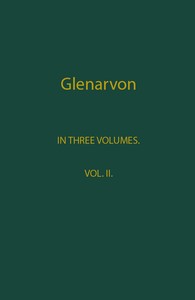
Glenarvon, Volume 2 (of 3) — Key Ideas to Explore can be approached with a clearer sense of reading commitment from its source measurements: 63,428 words, 4 hr 36 min estimated reading time, and 39 detected text sections.
The text analysis averages about 19.0 words per sentence, while the detected sections provide another way to judge how the source is divided.
Project Gutenberg metadata also associates the work with “Gothic fiction,” connecting these edition facts with the source record’s subject description.
Explore this collection
These alternatives are selected using recorded categories and estimated reading time.
About 244 minutes
Fantasy Juvenile Worlds
55,945 recorded words. 32 minutes difference from this book's estimate.
View Gutenberg source #72223About 237 minutes
Fantasy Juvenile Worlds
54,390 recorded words. 39 minutes difference from this book's estimate.
View Gutenberg source #70288About 324 minutes
Fantasy Juvenile Worlds
74,425 recorded words. 48 minutes difference from this book's estimate.
View Gutenberg source #73414Search stored excerpts and compare books → Choose by your preferences →
Choices use stored catalog measurements. Estimates vary with reading speed. A shared category is a catalog label, not a claim that two books have the same argument or literary quality.
Search reads excerpt text stored with this catalog and links to its associated Gutenberg record. The connection is stored in the site database; this tool does not recheck that every excerpt is word-for-word identical to that external record. Excerpt search does not cover every chapter and does not verify historical publication dates.
Catalog snapshot checked: 2026-09-25. Coverage: 100 public books, 100 available source excerpts.
Read the complete public-domain text at its original source.
Read on Project GutenbergThe second volume of Glenarvon opens with a cacophony of discontent: Catholic petitioners throng the outer courts, petitions are thrown through windows, and Sir Everard bursts in unannounced, brandishing a written case and weeping audibly. Lamb’s prose immediately establishes a world where private grief and public disorder collide. Sir Everard’s exaggerated lament—‘I am a wild beast, Sir—a dangerous animal’—is undercut by Gondimar’s dry remark about his ‘full rotundity of form,’ a tonal shift that typifies the novel’s restless voice. The scene is crowded, noisy, and physically intrusive, with characters interrupting breakfast, turning away to hide laughter, and speaking in exclamations. Lamb’s diction here is deliberately theatrical, mixing Irish-inflected dialect (‘if here ain’t my own dear Lady Calantha’) with the formal syntax of the narrator, creating a layered texture that mirrors the social chaos of the 1798 Rebellion backdrop.
Lamb’s characters rarely speak quietly. Sir Everard’s entrance is a performance: he ‘wept so audibly’ that onlookers struggle not to laugh, and he declares himself ‘a mere nothing now in the universe’ while Gondimar quips about his girth. This oscillation between pathos and farce is a deliberate authorial choice. Calantha herself, when confronted with Glenarvon’s betrayal, shifts from ‘supprest indignation’ to a proud declaration—‘even I can despise him’—then throws herself on her aunt’s bosom. Lamb uses physical action—weeping, turning away, embracing—to externalize emotion, making the page feel like a stage. The narrator notes that Calantha ‘smiled and spoke with levity, whilst her soul was in torture,’ a split between outward gesture and inner state that recurs throughout the volume. These vocal and physical extremes are not merely melodramatic; they signal a world where feeling must be performed to be believed, and where sincerity is constantly in doubt.
When Glenarvon encloses one of Calantha’s own letters to Mrs. Seymour, the language of the note is coldly legalistic: ‘her duplicity to me can scarcely justify the means I take of opening an aunt’s eyes.’ Lamb contrasts this formal cruelty with Calantha’s furious, fragmented speech: ‘I will not hate; that were too flattering to his vanity: I will not fly; that were a proof that there was cause for it.’ The repetition of ‘I will not’ and the logical structure (‘that were…’) reveal a mind trying to control its own narrative. Mrs. Seymour’s replies are measured—‘that stubborn spirit must be subdued’—but Calantha’s retorts escalate: ‘I would rather die in torture, than ever pardon this.’ Lamb’s diction here is precise: ‘supprest indignation,’ ‘lowered to the dust,’ ‘proudly, more vainly than ever.’ The vocabulary of pride and humiliation is woven through the dialogue, showing how Calantha’s self-worth is staked on Glenarvon’s regard, even as she denies it.
Lamb’s narrator frequently steps in to qualify or contradict the characters’ self-presentation. After Calantha’s defiant speech, the narrator adds: ‘But all this Calantha did but to cheer her aunt. Though not false, she dreaded any one’s seeing the real state of her mind.’ This narrative intervention creates a gap between what is said and what is true, a technique that complicates the reader’s trust. The narrator also uses free indirect style to merge with Calantha’s thoughts: ‘To have lost Glenarvon, was at this time the real source of her regret;—to speculate upon the cause of his sudden cruelty and treachery her sole occupation.’ The dash and the shift to ‘her sole occupation’ blur the line between report and interior monologue. Lamb’s authorial choices in these passages—the sudden narrative asides, the use of dashes for emotional breaks, the oscillation between third-person distance and psychological intimacy—create a restless, unstable voice that mirrors Calantha’s own volatility.
The physical settings in this volume are not mere backdrops but active participants in the emotional drama. The opening scene takes place in ‘the outer courts’ and ‘at breakfast,’ domestic spaces invaded by public grievance. Petitions are ‘thrown in at the windows,’ a detail that literalizes the intrusion of politics into private life. Later, Calantha’s confrontation with her aunt occurs in her room, a space that becomes a stage for her performance of composure: ‘she smiled and threw herself on her aunt’s bosom.’ The narrator notes that ‘the very moment Mrs. Seymour had left her, Calantha gave way to the rage of fury.’ The room itself seems to contain and then release her emotion. Lamb uses these settings to heighten the contrast between social performance and private despair. The courts, the breakfast room, the bedchamber—each is a threshold where public and private collide, and where Lamb’s characters act out the tensions of a society in upheaval.
Readers approaching this volume should attend to the disjunctions between what characters say and what the narrator reveals. Lamb’s authorial choices—theatrical dialogue, legalistic cruelty, narrative asides, and charged settings—build a world where emotion is both performed and painfully real. The volume does not resolve Calantha’s crisis but deepens it, leaving her suspended between pride and regret. Watch for the way Lamb uses physical gesture and vocal tone to signal shifts in power, and note how the narrator’s interventions complicate any simple reading of motive.
I keep returning to how Calantha’s despair feels like a room with the windows painted shut. The shoemaker — Reading Notes gave me the same stillness, watching someone labor quietly inside a grief that has no audience. There is comfort in that parallel—how certain sorrows refuse spectacle, yet somehow, in their solitude, they become most visible.
Build a private reading journal entry for this title.