About 411 minutes
The tenderfoots — A Reader’s Guide
Fantasy Juvenile Worlds
94,440 recorded words. 23 minutes difference from this book's estimate.
View Gutenberg source #73462
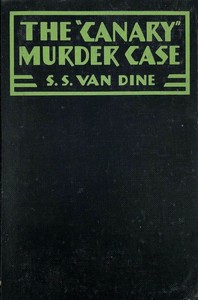
Before opening The "Canary" murder case — Story, Setting & Ideas, the edition data offers a quick orientation: 89,224 words, 6 hr 28 min estimated reading time, and 36 detected text sections.
The text analysis averages about 13.8 words per sentence, while the detected sections provide another way to judge how the source is divided.
Project Gutenberg metadata also associates the work with “Detective and mystery stories,” connecting these edition facts with the source record’s subject description.
Explore this collection
These alternatives are selected using recorded categories and estimated reading time.
About 411 minutes
Fantasy Juvenile Worlds
94,440 recorded words. 23 minutes difference from this book's estimate.
View Gutenberg source #73462About 364 minutes
Fantasy Juvenile Worlds
83,537 recorded words. 24 minutes difference from this book's estimate.
View Gutenberg source #70815About 361 minutes
Fantasy Juvenile Worlds
82,826 recorded words. 27 minutes difference from this book's estimate.
View Gutenberg source #69655Search stored excerpts and compare books → Choose by your preferences →
Choices use stored catalog measurements. Estimates vary with reading speed. A shared category is a catalog label, not a claim that two books have the same argument or literary quality.
Search reads excerpt text stored with this catalog and links to its associated Gutenberg record. The connection is stored in the site database; this tool does not recheck that every excerpt is word-for-word identical to that external record. Excerpt search does not cover every chapter and does not verify historical publication dates.
Catalog snapshot checked: 2026-09-25. Coverage: 100 public books, 100 available source excerpts.
Read the complete public-domain text at its original source.
Read on Project GutenbergThe narrator of The “Canary” Murder Case introduces himself as Philo Vance’s personal attorney and constant companion, a framing device that establishes a formal, retrospective voice. He describes having kept a complete record of the cases, presenting them in full detail with various sidelights. This opening sets a methodical, almost legalistic tone, but the excerpts soon reveal a contrasting register in Vance’s own speech: colloquial, laced with interjections like “eh, what?” and “don’t y’ know,” and punctuated by theatrical asides. The interplay between the narrator’s staid chronicle and Vance’s flamboyant dialogue creates a distinctive narrative texture.
The narrator, Van, writes in a measured, almost archival style: he was a spectator of an amazing series of criminal cases, and he performed a gratuitous labor of accumulation and transcription. This elevated diction—phrases like “methodical temperament” and “astonishing secret documents”—contrasts sharply with Vance’s conversational outbursts. In one excerpt, Vance addresses Van as “Van old thing” and chides him for showing emotion. Vance’s speech is peppered with affectations: “Cheerio!”, “beastly annoyin’,” and “touchin’, wasn’t it?” These mannerisms mark him as a distinct personality, one who treats murder investigation as a social puzzle. The narrator never adopts Vance’s tone, maintaining a respectful distance that underscores Vance’s eccentricity.
The excerpts show a rhythm where rapid-fire dialogue alternates with Vance’s extended, speculative monologues. In a drug-store booth, Vance telephones Markham with a breezy invitation: “I am taking you to lunch. I have numerous confidences I would pour into your ear.” The ensuing taxi ride contains a long, unbroken paragraph of Vance’s internal reasoning, full of rhetorical questions and dashes: “Mannix. . . . Curious he should crop up again. . . . Something queer about that business discussion.” This stream-of-consciousness style slows the narrative, inviting the reader into Vance’s mental process. Later, at the Bankers’ Club, the pace quickens with clipped, irritable exchanges between Vance and Markham. The shifts from leisurely speculation to tense dialogue create a dynamic reading experience.
Several details recur across the excerpts, suggesting patterns without revealing the full plot. The character Alys is described as “clever—there are brains in that fluffy head,” and she immediately intuits that Skeel is not guilty. Vance notes her trust in him. The name “Mannix” appears twice, first as a figure who issued orders to Alys to keep quiet, then as a subject of Vance’s curiosity about his alibi. The doctor is linked to “jealous mania” and “paranoia,” with Vance speculating about his dangerousness. These repeated references—to alibis, phone calls, and hidden motives—build a sense of interconnected clues. The narrator’s methodical record-keeping reinforces the idea that every detail matters, even when Vance admits, “It’s a devilish tangle.”
Readers attentive to voice will notice how Van Dine uses the narrator’s stiff prose as a foil for Vance’s verbal flair. The excerpts offer only fragments of the investigation, but they reveal a deliberate craft in pacing: the story moves from calm exposition to heated debate to quiet rumination. Paying attention to who speaks and how—whether in long, winding sentences or sharp retorts—can illuminate the underlying tensions and red herrings that define this classic whodunit.
Reading the editorial note on Van Dine’s formal restraint, I kept thinking of how the same careful detachment underpins Lolly Willowes. Both books hold their protagonists at arm’s length, yet the distance feels intimate, almost protective. I once underlined a passage in each, wondering if silence itself was the true narrator. That quiet thread ties them, gently, in my memory. Lolly Willowes — Context and Discussion
Build a private reading journal entry for this title.