About 444 minutes
A lady and her husband — Background and Themes
Fantasy Juvenile Worlds
102,047 recorded words. 106 minutes difference from this book's estimate.
View Gutenberg source #71152
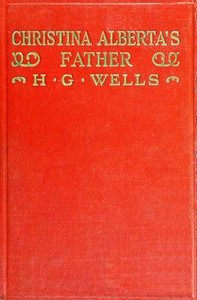
Christina Alberta's father — Edition Insights can be approached with a clearer sense of reading commitment from its source measurements: 126,283 words, 9 hr 10 min estimated reading time, and 20 detected text sections.
The text analysis averages about 13.4 words per sentence, while the detected sections provide another way to judge how the source is divided.
Project Gutenberg metadata also associates the work with “Self-actualization (Psychology) -- Fiction,” connecting these edition facts with the source record’s subject description.
Explore this collection
These alternatives are selected using recorded categories and estimated reading time.
About 444 minutes
Fantasy Juvenile Worlds
102,047 recorded words. 106 minutes difference from this book's estimate.
View Gutenberg source #71152About 411 minutes
Fantasy Juvenile Worlds
94,440 recorded words. 139 minutes difference from this book's estimate.
View Gutenberg source #73462About 388 minutes
Fantasy Juvenile Worlds
89,224 recorded words. 162 minutes difference from this book's estimate.
View Gutenberg source #70788Search stored excerpts and compare books → Choose by your preferences →
Choices use stored catalog measurements. Estimates vary with reading speed. A shared category is a catalog label, not a claim that two books have the same argument or literary quality.
Search reads excerpt text stored with this catalog and links to its associated Gutenberg record. The connection is stored in the site database; this tool does not recheck that every excerpt is word-for-word identical to that external record. Excerpt search does not cover every chapter and does not verify historical publication dates.
Catalog snapshot checked: 2026-09-25. Coverage: 100 public books, 100 available source excerpts.
Read the complete public-domain text at its original source.
Read on Project GutenbergThe novel opens with a detailed account of Mr. Preemby’s early life, establishing him as a small, unremarkable man. The narrative voice is precise, noting his “little blue eyes” and his work as a laundry clerk. The structure immediately signals a shift: the arrival of Christina Alberta, his daughter, who is described with a contrasting energy. The story then moves through a series of settings—Lonsdale Mews, the Petunia Boarding House—each marked by specific, often shabby, details. The recurring image of costumes and titles becomes central when Mr. Preemby adopts the identity of Sargon, King of Kings, a role he plays with increasing conviction. The narrative follows his public attempts to proclaim a new empire, from a restaurant to a police station, while Christina Alberta consults a “wise man” and later searches for her father. The structure is episodic, with each section titled like a chapter in a chronicle, yet the tone remains observational, often ironic.
The novel repeatedly frames identity as a performance. Mr. Preemby’s transformation into Sargon is not merely a delusion but a staged role, complete with a title, a mission, and an imagined court. The text describes him “adjusting himself” to his new phase, as if changing costumes. The restaurant scene, where he plans an “opening banquet,” is a stage set for his proclamation. The narrative voice undercuts this by noting the “rich decorations” and the eventual police intervention. Christina Alberta, too, adopts roles: she is the practical daughter, then the seeker. The supporting characters—Bobby, Billy, the ex-soldiers, the man with the organ—function as an audience or chorus, reacting to Sargon’s performance. The novel’s structure, divided into books titled “The Coming of Sargon,” “The World Rejects Sargon,” and “The Resurrection of Sargon,” mirrors a dramatic arc, with each section marking a new act in this personal drama.
The narrative moves through a series of sharply contrasted settings. Early chapters are set in confined interiors: the laundry, the mews, the boarding house. These spaces are described with precise, often claustrophobic detail—the “white room with the purple curtains,” the “great restaurant.” As Sargon’s delusion grows, the action shifts to more public, open spaces: the restaurant, the street, the police station. The journey “underneath the world” in Book Two suggests a literal descent, but the text also implies a psychological movement. The final section, “May at Udimore,” introduces a rural setting, a shift from the urban scenes. This movement between confinement and openness mirrors the protagonist’s fluctuating grasp on reality. The narrative often pauses to describe the physical environment, using it to reflect the characters’ states: the “squalid police-court” contrasts with the imagined empire.
Titles and documents recur as motifs throughout the novel. Mr. Preemby adopts the title “Sargon, King of Kings,” which is repeated in the chapter headings and in his own speech. The narrative treats this title with a mixture of gravity and irony. Documents also appear: Mr. Mobamba’s “sheet of paper” that is his “one intelligible link with London,” the ticket, the police report. These objects are often crumpled, misunderstood, or lost. The text notes that the young reporter tries to find someone who understands “the rare and obscure language of Oldham” to verify facts, highlighting the gap between official records and lived experience. The novel’s own structure, with its formal chapter titles and book divisions, contrasts with the chaotic events it describes. This tension between order and disorder is central to the work’s exploration of how identity is documented and disputed.
The novel frequently places characters in the role of observers who deny knowledge of Sargon. In the restaurant scene, Bobby and Billy watch from the entrance hall, and when questioned by a police officer, Billy denies knowing Sargon: “Not a bit! … Never seen him before.” Bobby acquiesces by silence. This denial is a recurring pattern: characters witness the delusion but refuse to acknowledge it publicly. The narrative notes that the ex-soldiers have “mizzled” at the appearance of policemen, and the man in mourning has been “cleared up.” These minor characters drift away, leaving Sargon isolated. Later, Bobby expresses regret for denying Sargon, but the damage is done. The novel uses these moments to examine complicity and the social mechanics of ignoring inconvenient truths. The observers are not neutral; their denials shape the outcome of events, as Sargon is led away without support.
Readers attentive to the novel’s structure will notice how each book ends with a moment of suspension—Sargon’s capture, his journey, his resurrection. The narrative does not resolve the central delusion but instead follows its consequences through the eyes of those around him. The recurring images of costumes, documents, and denied recognition invite a reading that focuses on the gap between private belief and public performance. This is a novel less about madness than about the social stage on which it is enacted.
I remember my father once borrowing a neighbor’s coat for a village pageant, and for a single afternoon he truly became someone else. Reading about Mr. Preemby’s shining delusion, I thought of that quiet transformation, how a costume can hold a truth we’re afraid to voice. A lady and her husband — Background and Themes stirred the same ache, watching two people play roles for each other until the mask felt more real than the face beneath.
Use these questions to collect your thoughts before moving on.