About 325 minutes
Contraband — Key Ideas to Explore
Fantasy Juvenile Worlds
74,572 recorded words. 1 minutes difference from this book's estimate.
View Gutenberg source #72066
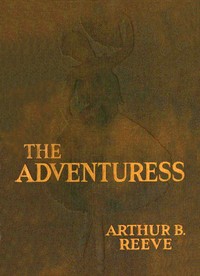
Before opening The adventuress — Story, Setting & Ideas, the edition data offers a quick orientation: 74,425 words, 5 hr 24 min estimated reading time, and 30 detected text sections.
The text analysis averages about 14.2 words per sentence, while the detected sections provide another way to judge how the source is divided.
Project Gutenberg metadata also associates the work with “New York (N.Y.) -- Fiction,” connecting these edition facts with the source record’s subject description.
Explore this collection
These alternatives are selected using recorded categories and estimated reading time.
About 325 minutes
Fantasy Juvenile Worlds
74,572 recorded words. 1 minutes difference from this book's estimate.
View Gutenberg source #72066About 340 minutes
Fantasy Juvenile Worlds
78,179 recorded words. 16 minutes difference from this book's estimate.
View Gutenberg source #69877About 361 minutes
Fantasy Juvenile Worlds
82,826 recorded words. 37 minutes difference from this book's estimate.
View Gutenberg source #69655Search stored excerpts and compare books → Choose by your preferences →
Choices use stored catalog measurements. Estimates vary with reading speed. A shared category is a catalog label, not a claim that two books have the same argument or literary quality.
Search reads excerpt text stored with this catalog and links to its associated Gutenberg record. The connection is stored in the site database; this tool does not recheck that every excerpt is word-for-word identical to that external record. Excerpt search does not cover every chapter and does not verify historical publication dates.
Catalog snapshot checked: 2026-09-25. Coverage: 100 public books, 100 available source excerpts.
Read the complete public-domain text at its original source.
Read on Project GutenbergThe novel opens not with a crime but with a crime interrupted: a revolver shot shatters the door of the Chemistry Building, and a disheveled man stumbles into Craig Kennedy's laboratory. The scene is built through sensory fragments—the crash of glass, the dazed expression, the stimulant forced into trembling lips—rather than a full description of the assailant. Reeve's prose here is economical, letting the abrupt action and the victim's fragmented speech carry the tension. The dialogue, too, is clipped: 'Some one—must have—shadowed me—all the way,' gasps the visitor, the dashes mimicking his breathlessness. This technique recurs throughout the excerpts, where characters often speak in halting, interrupted lines, suggesting a world where events outpace articulation.
Reeve's vocabulary oscillates between the technical jargon of Kennedy's scientific detective work and the colloquial rhythms of New York City. In the opening, Kennedy's laboratory is a place of 'stimulant' and 'microphone receivers,' but the narrative also slips into phrases like 'pretty deep' and 'confound it.' This lexical range mirrors the story's dual setting: the controlled environment of the Chemistry Building versus the chaotic, eavesdropping-filled world of cabarets and beachfront meetings. The geophone, described as 'the simplest form of telephone, applied to the earth,' is rendered in plain language that a high-school student could grasp, yet it becomes a tool for surveillance that blurs public and private space. Reeve's choice to explain the device in simple terms keeps the focus on its function rather than its novelty, grounding the science in the story's social fabric.
The excerpts reveal a pattern of dialogue that functions less as direct exposition and more as a web of conjecture. Characters rarely state facts; instead, they propose motives and counter-motives in a chain of speculation. For instance, Burke says, 'If Marshall Maddox was separated from his wife, don't you see he would have destroyed his will in her favor,' and Riley responds with a theory about Paquita being 'put up to winning Marshall Maddox away.' These exchanges are layered with conditionals—'if,' 'maybe,' 'might have been'—that create a sense of uncertainty. Reeve uses this tentative speech to show how the characters themselves are piecing together a puzzle, and the reader is left to weigh the plausibility of each hypothesis. The dialogue is also marked by interruptions: Riley is cut off by Burke's 'Confound it, Riley,' and Kennedy's 'Sh!' silences the room, emphasizing that the spoken word is always subject to being overheard or overridden.
Reeve's descriptive passages often rely on the act of listening. When Kennedy uses the geophone, the narrative shifts from visual to auditory: 'Some one is in that garage... Those are footsteps.' The description of the garage is not given directly; it is inferred from the sound. Similarly, the opening scene's violence is conveyed through the 'crash of glass' and the 'revolver-shot' before any visual confirmation. This preference for sound over sight extends to the characters' interactions: Riley's perplexity is shown through his 'face assuming the same look of perplexity,' but the key information comes from what he overhears or reports. Even the setting of the 'White Light Café' is evoked not by its appearance but by its name and the conversations that take place there. Reeve's descriptive choices consistently privilege the acoustic environment, making the reader an eavesdropper alongside Kennedy.
The excerpts contain a recurring structural device: the 'frame-up.' Characters repeatedly set traps to catch suspects, and the narrative mirrors this by building scenes around anticipation and payoff. In the opening, the visitor is 'shadowed' and the shot is a failed ambush. Later, Kennedy sets up a geophone to monitor a garage, and the payoff is the detection of 'two of them.' This pattern of setup and surveillance gives the prose a procedural rhythm. Reeve also uses chapter titles that promise a specific gadget or event—'The Burglar's Microphone,' 'The Geophone,' 'The Telautomaton'—but the excerpts show that the actual detection often hinges on human error or coincidence rather than the device alone. The structure thus creates a tension between the promise of scientific certainty and the messiness of human motives, a tension that is never fully resolved in the passages provided.
Readers approaching The Adventuress should attend to how Reeve balances the scientific with the social. The gadgets are described with clarity, but the real detective work lies in parsing the characters' half-spoken suspicions and the sounds that slip through walls. The excerpts suggest a novel where the most important clues are not seen but heard—footsteps, whispers, a revolver shot offstage. This orientation toward the auditory may reward careful attention to dialogue and offhand remarks, as the narrative often withholds visual confirmation until the last moment.
I was rereading the editorial notes on Reeve’s diction, those careful 1917 word choices, and found myself missing the looser, more reckless cadence of old romances. Something in the way he fusses over description made me recall the wilder, unguarded emotion in Glenarvon, Volume 2 (of 3) — Key Ideas to Explore. Both are echoes of their time, yet one breathes so differently.
Use these questions to collect your thoughts before moving on.