About 331 minutes
Captain Fly-by-Night — Key Ideas to Explore
Adventure Picaresque Fiction
75,949 recorded words. 27 minutes difference from this book's estimate.
View Gutenberg source #72893
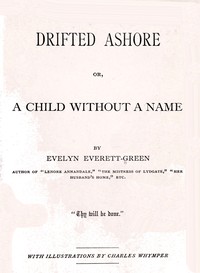
Drifted ashore; — Themes and Context can be approached with a clearer sense of reading commitment from its source measurements: 69,796 words, 5 hr 4 min estimated reading time, and 25 detected text sections.
The text analysis averages about 19.0 words per sentence, while the detected sections provide another way to judge how the source is divided.
Project Gutenberg metadata also associates the work with “Christian life -- Fiction,” connecting these edition facts with the source record’s subject description.
Explore this collection
These alternatives are selected using recorded categories and estimated reading time.
About 331 minutes
Adventure Picaresque Fiction
75,949 recorded words. 27 minutes difference from this book's estimate.
View Gutenberg source #72893About 333 minutes
Adventure Picaresque Fiction
76,560 recorded words. 29 minutes difference from this book's estimate.
View Gutenberg source #71916About 274 minutes
Adventure Picaresque Fiction
63,002 recorded words. 30 minutes difference from this book's estimate.
View Gutenberg source #72528Search stored excerpts and compare books → Choose by your preferences →
Choices use stored catalog measurements. Estimates vary with reading speed. A shared category is a catalog label, not a claim that two books have the same argument or literary quality.
Search reads excerpt text stored with this catalog and links to its associated Gutenberg record. The connection is stored in the site database; this tool does not recheck that every excerpt is word-for-word identical to that external record. Excerpt search does not cover every chapter and does not verify historical publication dates.
Catalog snapshot checked: 2026-09-25. Coverage: 100 public books, 100 available source excerpts.
Read the complete public-domain text at its original source.
Read on Project GutenbergThe novel begins with a detailed description of an April sea, its waves 'racing in upon the beach' and the sky alternating between dark clouds and 'powdered gold dust' sunlight. A boy sits beneath an old boat, watching the water. The catalog lists 'Christian life' and 'Amnesia' as subjects, but the excerpts show the amnesia is not directly addressed in the opening; instead, the boy's stillness and the sea's mood dominate. The narrative voice is descriptive and moralizing, as seen later in Uncle Fred's speeches about fear and duty.
The opening chapter uses the sea not just as setting but as a moral metaphor. Waves are described with 'resentment and wrath' and later as 'laughing and rejoicing,' mirroring the emotional and ethical contrasts in the story. The boy's passive watching contrasts with the sea's activity, hinting at his unknown past. This technique persists: Uncle Fred later uses the sea as a backdrop for lessons on courage. The catalog subject 'Christian life' is not overt in the excerpts; instead, moral instruction is delivered through natural imagery and dialogue.
Queenie, a girl with 'blue eyes, that glowed and flashed,' challenges Uncle Fred's definition of bravery. She scoffs at fear of 'rats, and mice, and snakes' and dismisses foreign kings as cowards. Uncle Fred counters with a Christian allegory of serving a 'great King,' but Queenie remains unconvinced. This exchange reveals a tension between the catalog subject 'Christian life' and the actual narrative: the moralizing is explicit, but Queenie's resistance suggests the story may not simply endorse piety. The excerpt ends with Phil's pragmatic acceptance of punishment, showing varied responses to authority.
The subtitle 'A Child Without a Name' and the catalog subject 'Foundlings' point to the boy's identity as a central mystery. However, the excerpts do not mention his name or amnesia directly. Instead, the narrative focuses on his silent observation and the community's reactions. The chapter titles—'The Fisherman’s Hut,' 'The Squire’s Hall'—suggest a social hierarchy that the foundling may disrupt. The catalog subject 'Boys' is evident in Phil and Bertie, but the excerpts show Queenie as equally prominent, complicating the gender focus. Readers should expect a slow revelation of the boy's past, if at all, given the moralizing tone.
The excerpts show a novel more concerned with moral instruction through dialogue than with plot-driven mystery. Readers expecting a straightforward amnesia story may find the religious allegory and character debates more prominent. The sea imagery and Queenie’s defiance offer entry points, but the narrative’s pace and didacticism require patience. Approach this as a Victorian moral tale set in a coastal community, where the foundling’s identity may be secondary to the lessons learned.
Queenie made me think of a summer I spent on the cliffs, watching boys boast of daring, yet flinch at a stray dog’s growl—bravery was always quieter than we pretended. That same hush lingers in The Earl's promise — Background and Themes, where a promise feels heavier than any adventure, and I remembered how a worn copy taught me that keeping faith was its own gentle shore. Both books hold that odd ache.
Build a private reading journal entry for this title.