About 267 minutes
Of no account — Key Ideas to Explore
Adventure Picaresque Fiction
61,308 recorded words. 27 minutes difference from this book's estimate.
View Gutenberg source #73416

The catalog record for The Earl's promise — Background and Themes provides practical reading context through 54,996 words, 4 hr estimated reading time, and 13 detected text sections.
The text analysis averages about 21.5 words per sentence, while the detected sections provide another way to judge how the source is divided.
Project Gutenberg metadata also associates the work with “City and town life -- Fiction,” connecting these edition facts with the source record’s subject description.
Explore this collection
These alternatives are selected using recorded categories and estimated reading time.
About 267 minutes
Adventure Picaresque Fiction
61,308 recorded words. 27 minutes difference from this book's estimate.
View Gutenberg source #73416About 274 minutes
Adventure Picaresque Fiction
63,002 recorded words. 34 minutes difference from this book's estimate.
View Gutenberg source #72528About 197 minutes
Adventure Picaresque Fiction
45,300 recorded words. 43 minutes difference from this book's estimate.
View Gutenberg source #70964Search stored excerpts and compare books → Choose by your preferences →
Choices use stored catalog measurements. Estimates vary with reading speed. A shared category is a catalog label, not a claim that two books have the same argument or literary quality.
Search reads excerpt text stored with this catalog and links to its associated Gutenberg record. The connection is stored in the site database; this tool does not recheck that every excerpt is word-for-word identical to that external record. Excerpt search does not cover every chapter and does not verify historical publication dates.
Catalog snapshot checked: 2026-09-25. Coverage: 100 public books, 100 available source excerpts.
Read the complete public-domain text at its original source.
Read on Project GutenbergThe first volume of The Earl's Promise opens with a sustained, almost ethnographic description of Kingslough, a town that is 'the stupidest, dullest, dirtiest little town' in Ulster at high noon, yet tranquil and beautiful when seen from the sea. This split between appearance and reality—the town's natural setting versus its mean, utilitarian streets—sets a pattern for the novel's treatment of place. The narrative then moves to Rosemont, the Glendare family seat, where a similar contrast emerges: the 'garden side' of the mansion, with its old-fashioned flowers and convent-like peace, is the only part Lady Glendare loves, while the family as a whole are described as 'aliens' who own the soil but are not of it.
The opening chapter establishes Kingslough and Rosemont as opposing but linked spaces. Kingslough is a place of 'wild excitement' on market days followed by 'death-like stillness,' its streets straight and strictly utilitarian. Rosemont, by contrast, is 'over-housed and under-incomed,' a mansion built for a monarch but neglected for generations. The garden side of Rosemont, with its privet hedges, roses, and passion-flowers, is described in lush detail—'beautiful exceedingly'—yet this beauty is isolated, appreciated only by Lady Glendare and not by the rest of the family. The narrator explicitly states that the Glendares 'had none of that passionate love of scenery' that might have connected them to the land. This spatial division suggests a deeper estrangement: the family occupies the estate but does not belong to it, just as the town's inhabitants seem absent from their own picturesque setting.
The narrative shifts abruptly from the town's empty streets to the interior of Rosemont, then to the enclosed garden. These movements are not merely geographical but also tonal: the public, dusty, faction-ridden town gives way to the private, orderly, floral world of the garden. The garden itself is a space of memory and longing—Lady Glendare says it reminds her of 'the sweet peace of a convent garden.' Yet even this haven is tinged with loss: the flowers described are old-fashioned varieties that 'have had their day and disappeared.' The novel's structure thus relies on a series of contrasts—between noise and silence, neglect and cultivation, belonging and alienation—that are embodied in the physical movement from one setting to another. The reader is invited to observe how characters inhabit these spaces, and how the spaces themselves resist or reflect their inhabitants' desires.
Three images recur across the excerpts: dust, flowers, and the sea. Kingslough is dusty at high noon; the narrator notes that the wind might 'sweep off the dust' but the Glendares have cared nought for the place. The garden, by contrast, is a riot of flowers—gentianella, lilies of the valley, harebells, tulips, roses—described in precise, almost botanical detail. The sea appears as a backdrop: Kingslough is 'situated on an arm of the sea,' and the waves ripple 'gently in over the red sandstone beach.' These images are not merely decorative; they carry thematic weight. Dust suggests neglect and transience; flowers represent a fragile, cultivated beauty that is passing out of fashion; the sea implies a wider world beyond the town and estate. Together, they create a sensory texture that reinforces the novel's preoccupation with what is lost or overlooked.
The narrator explicitly characterizes the Glendares as 'aliens' who are 'not Irish' despite owning the soil. This is a striking claim, given the novel's Ulster setting. The family's detachment is embodied in Mr. Robert Somerford, who 'cared really no more for any blade of grass in the emerald isle than he would have done for roses of Sharon.' The simile is telling: it equates Irish land with a biblical, foreign flower, suggesting a fundamental disconnection. The Glendares are 'adaptable' but 'false,' living a life that is 'a lie—an assumption of qualities he did not possess.' This moral judgment, delivered in the narrator's voice, frames the family's relationship to place as a form of dishonesty. The novel thus uses setting not merely as background but as a measure of character: to be out of place is to be out of truth.
Readers approaching The Earl's Promise should attend to how Mrs. Riddell uses physical spaces—a dusty town, a neglected mansion, a cherished garden—to reveal the emotional and moral distances between her characters. The novel's structure, moving between public and private scenes, rewards attention to recurring details like flowers and dust, which accumulate meaning across the volume. The excerpts suggest a work more concerned with atmosphere and social observation than with rapid plot, making it a deliberate, textured read.
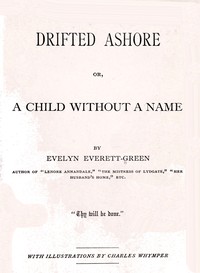
My grandfather's farm in County Down had that same neglected quiet—brambles swallowing the lane, rooms shut up like held breath. Reading about the Glendares' estrangement from Rosemont made me recall how Drifted ashore once captured a similar ache of belonging gone sideways, place holding memory but withholding comfort. That book felt like a whispered conversation across decades. Drifted ashore; — Themes and Context lingers with me still, like remembering someone's hands on a gate they no longer own.
Answer a few questions and save a private reflection on this device.