About 359 minutes
A tragedy of love and hate — Reading Companion
Adventure Picaresque Fiction
82,561 recorded words. 6 minutes difference from this book's estimate.
View Gutenberg source #71769
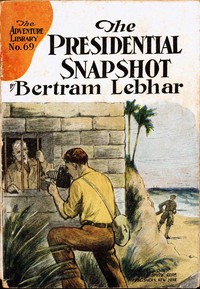
The catalog record for The presidential snapshot — Story, Setting & Ideas provides practical reading context through 83,865 words, 6 hr 5 min estimated reading time, and 56 detected text sections.
The text analysis averages about 16.3 words per sentence, while the detected sections provide another way to judge how the source is divided.
Project Gutenberg metadata also associates the work with “Dime novels,” connecting these edition facts with the source record’s subject description.
Explore this collection
These alternatives are selected using recorded categories and estimated reading time.
About 359 minutes
Adventure Picaresque Fiction
82,561 recorded words. 6 minutes difference from this book's estimate.
View Gutenberg source #71769About 356 minutes
Adventure Picaresque Fiction
81,691 recorded words. 9 minutes difference from this book's estimate.
View Gutenberg source #68875About 377 minutes
Adventure Picaresque Fiction
86,629 recorded words. 12 minutes difference from this book's estimate.
View Gutenberg source #69669Search stored excerpts and compare books → Choose by your preferences →
Choices use stored catalog measurements. Estimates vary with reading speed. A shared category is a catalog label, not a claim that two books have the same argument or literary quality.
Search reads excerpt text stored with this catalog and links to its associated Gutenberg record. The connection is stored in the site database; this tool does not recheck that every excerpt is word-for-word identical to that external record. Excerpt search does not cover every chapter and does not verify historical publication dates.
Catalog snapshot checked: 2026-09-25. Coverage: 100 public books, 100 available source excerpts.
Read the complete public-domain text at its original source.
Read on Project GutenbergBertram Lebhar's The Presidential Snapshot (1914) belongs to Street & Smith's Carnival of Action Adventure Library, a series promising 'a breath of fresh air' and stories set 'in the big outdoors.' The novel's title and chapter headings—'The Plate Developed,' 'A Forced Play,' 'Blue Spectacles'—signal a plot driven by photography and intrigue. The excerpt from Chapter XXVI reveals a key shift in pace: after a train pursuit, the narrative slows to a meticulous, almost technical description of developing a photographic plate by ruby lamplight. This contrast between hurried action and deliberate process is central to the book's narrative voice.
The opening of Chapter XXVI shows Hawley and his companion catching a train 'just about to pull out of the station,' a moment of narrow escape. The prose is brisk: 'If he had been half a minute later he might have found himself stranded.' But once aboard, the focus shifts to the spies who 'got aboard, taking the precaution, however, of entering a car at the other end.' The tension remains, but the pace changes when Hawley reaches his hotel room. There, the narrative slows to describe barricading the door with furniture, stationing Lieutenant Ridder on the balcony with a revolver, and unpacking a 'ruby lamp' and 'all the other materials necessary for developing a plate.' The language becomes precise: 'removing the plate holder from the camera, he withdrew the negative and plunged it into the developing bath.' This shift from chase to careful procedure marks a structural pattern in the novel—moments of high action punctuated by concentrated, almost solitary work.
The protagonist is consistently called 'the Camera Chap,' a nickname that blends his profession with a breezy, adventurous tone. Lebhar's narrator uses colloquial phrases: Hawley 'congratulated himself upon his luck' and 'felt confident that Portiforo was going to have quite a time getting that plate away from him.' The voice is informal, with touches of humor—the loaded revolver is called 'this toy.' Yet the narrative also includes specific details about photographic equipment: a 'waterproof bag,' a 'shallow hard-rubber tray,' and the warning that 'the admission of the slightest ray of moonlight into the room might spoil the negative.' This combination of slang and technical jargon creates a distinctive voice that treats photography as both a craft and a source of suspense. The reader learns that Hawley 'had brought them with him, foreseeing the possibility of just such an emergency,' suggesting a methodical side beneath the adventurous exterior.
The developing scene builds suspense by limiting sensory information. The room is dark except for the ruby lamp; the window shade is drawn to block moonlight. Lieutenant Ridder, on the balcony, can only hear 'an exclamation of dismay' and must whisper 'What's the trouble?' without entering. The narrative withholds the outcome: 'Five minutes later, the young naval officer on guard on the balcony heard an exclamation of dismay from within the room.' The reader, like Ridder, is left waiting. This technique of restricted perspective—where the point of view stays with the character outside the room—heightens the moment. Lebhar uses the physical constraints of the setting (locked door, drawn shade, single window) to create a claustrophobic atmosphere that contrasts with the open 'big outdoors' promised by the series. The pace slows to a crawl, making the eventual revelation of the developed plate a release of accumulated tension.
Readers will find that The Presidential Snapshot alternates between swift action and deliberate, process-oriented scenes. Pay attention to how Lebhar uses technical details—photography, wireless warnings, sealed orders—not as decoration but as engines of plot. The narrative voice, with its blend of slang and precision, rewards close reading of the quieter moments between chases.
That moment in the darkroom, barricaded and listening for footsteps, took me straight back to my grandfather’s study, where I first found The presidential snapshot amid his old lockets and sepia prints. I remember feeling that same held breath while reading A tragedy of love and hate — Reading Companion, how stillness itself could tremble with waiting. The chemicals and shadows felt almost familiar, like visiting a room I’d forgotten.
Build a private reading journal entry for this title.