About 356 minutes
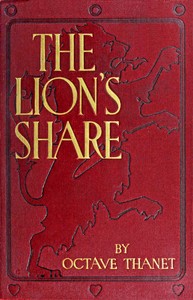
The lion's share — Text and Context
Adventure Picaresque Fiction
81,691 recorded words. 3 minutes difference from this book's estimate.
View Gutenberg source #68875
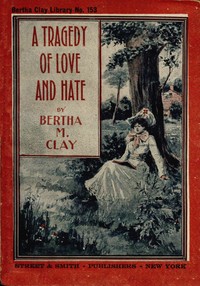
The catalog record for A tragedy of love and hate — Reading Companion provides practical reading context through 82,561 words, 5 hr 59 min estimated reading time, and 61 detected text sections.
The text analysis averages about 15.5 words per sentence, while the detected sections provide another way to judge how the source is divided.
Project Gutenberg metadata also associates the work with “Detective and mystery stories,” connecting these edition facts with the source record’s subject description.
Explore this collection
These alternatives are selected using recorded categories and estimated reading time.
About 356 minutes
Adventure Picaresque Fiction
81,691 recorded words. 3 minutes difference from this book's estimate.
View Gutenberg source #68875About 365 minutes
Adventure Picaresque Fiction
83,865 recorded words. 6 minutes difference from this book's estimate.
View Gutenberg source #70413About 377 minutes
Adventure Picaresque Fiction
86,629 recorded words. 18 minutes difference from this book's estimate.
View Gutenberg source #69669Search stored excerpts and compare books → Choose by your preferences →
Choices use stored catalog measurements. Estimates vary with reading speed. A shared category is a catalog label, not a claim that two books have the same argument or literary quality.
Search reads excerpt text stored with this catalog and links to its associated Gutenberg record. The connection is stored in the site database; this tool does not recheck that every excerpt is word-for-word identical to that external record. Excerpt search does not cover every chapter and does not verify historical publication dates.
Catalog snapshot checked: 2026-09-25. Coverage: 100 public books, 100 available source excerpts.
Read the complete public-domain text at its original source.
Read on Project GutenbergThe novel opens with a striking contrast: a bird singing on a maple bough in summer sunshine, while the title promises a tragedy of love and hate. The first chapter, 'The Tragedy,' immediately establishes a death—Lady Clarice—and a mystery: 'Who Killed Lady Clarice?' The narrative voice shifts between idyllic natural description and the looming violence of an unsolved murder.
The excerpt from Chapter VIII shows Sir Ronald Eyrtle, a man transformed from gloom to happiness by his wife Hermione, torn between a two-year scientific expedition to Africa and his family. Hermione's selfless encouragement, despite her pain, sets up a fateful decision. The language is emotionally heightened, with phrases like 'sweet, simple, loving soul' and 'doom her innocent prayers were bringing down on her own head,' signaling that this domestic harmony will not last.
The excerpt centers on a pivotal domestic scene. Sir Ronald receives a letter from a world-renowned scientist, Dr. L——, inviting him on an expedition. Hermione's reaction is layered: pride, pleasure, surprise, and then pain. She urges him to go, believing the change will complete his recovery from a past 'slough of despond.' The narrator's comment that she was 'utterly unconscious of the doom her innocent prayers were bringing down on her own head' creates dramatic irony. The couple's decision is not made alone; they consult friends and Kenelm Eyrle, who promises to watch over Hermione and the children. This collaborative choice, framed as rational, contrasts with the emotional undercurrents of sacrifice and foreboding.
Chapter titles like 'Kenelm Eyrle's Vow' and 'Remember Your Vow' indicate that a promise—likely to find Lady Clarice's killer—drives the plot. The excerpt shows Kenelm advising Sir Ronald to go, saying, 'If I live in the shade, Ronald, you may go into the sun.' This line positions Kenelm as a self-sacrificing figure, perhaps bound by his own dark past. The 'shade' may refer to the unsolved tragedy that hangs over Aldenmere. The novel's structure, with chapters such as 'The Mystery Unsolved' and 'In Defense of Crime,' suggests that the vow becomes a moral burden, testing loyalties and leading to accusations—as seen in 'Kenelm Eyrle's Accusation.'
The opening description of Holme Woods—'the earth was fair and smiling, the sky blue; there was a hush in the green woods'—establishes a pastoral beauty that contrasts with the violent death of Lady Clarice. This technique recurs: the natural world is used to reflect or offset human emotion. In the excerpt, the summer setting and the bird's song create a serene backdrop for Sir Ronald's inner turmoil. Later chapters, such as 'In Holme Woods' and 'The Dower House Watched,' suggest that the landscape itself becomes a site of surveillance and revelation. The repeated references to 'the tragedy' as a past event that colors the present give the setting a haunted quality, where beauty and menace coexist.
Readers should pay attention to how the novel balances its dual genres: the detective mystery of Lady Clarice's murder and the romance of Sir Ronald and Hermione. The vow taken by Kenelm Eyrle may be the key to both threads. The excerpt's emphasis on decision-making and hidden costs invites scrutiny of how characters' choices echo the initial tragedy. The dense chapter titles offer a roadmap of reversals—'Bad Made Worse,' 'A Fiendish Accusation'—that reward careful tracking.
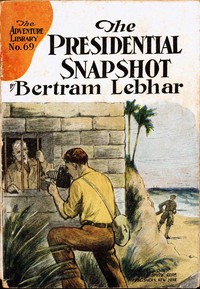
That old Clay story stayed with me—how a vow to the dead can twist love into something colder than hate. Holme Woods kept whispering long after I closed it. It reminded me of another quiet thing, The presidential snapshot — Story, Setting & Ideas, where a single image holds secrets nobody wants to name. Both left me feeling like I’d walked through someone else’s dusk.
A brief reflection can help important ideas stay with you longer.