About 391 minutes
Invincible Minnie — Story, Setting & Ideas
Adventure Picaresque Fiction
89,843 recorded words. 61 minutes difference from this book's estimate.
View Gutenberg source #68802
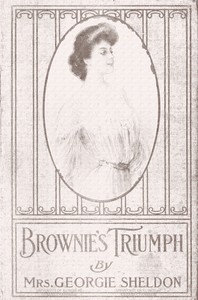
The catalog record for Brownie's triumph — Inside the Classic provides practical reading context through 103,957 words, 7 hr 32 min estimated reading time, and 45 detected text sections.
The text analysis averages about 19.0 words per sentence, while the detected sections provide another way to judge how the source is divided.
Project Gutenberg metadata also associates the work with “Social classes -- Fiction,” connecting these edition facts with the source record’s subject description.
Explore this collection
These alternatives are selected using recorded categories and estimated reading time.
About 391 minutes
Adventure Picaresque Fiction
89,843 recorded words. 61 minutes difference from this book's estimate.
View Gutenberg source #68802About 390 minutes
Adventure Picaresque Fiction
89,619 recorded words. 62 minutes difference from this book's estimate.
View Gutenberg source #69070About 515 minutes
Adventure Picaresque Fiction
118,421 recorded words. 63 minutes difference from this book's estimate.
View Gutenberg source #73739Search stored excerpts and compare books → Choose by your preferences →
Choices use stored catalog measurements. Estimates vary with reading speed. A shared category is a catalog label, not a claim that two books have the same argument or literary quality.
Search reads excerpt text stored with this catalog and links to its associated Gutenberg record. The connection is stored in the site database; this tool does not recheck that every excerpt is word-for-word identical to that external record. Excerpt search does not cover every chapter and does not verify historical publication dates.
Catalog snapshot checked: 2026-09-25. Coverage: 100 public books, 100 available source excerpts.
Read the complete public-domain text at its original source.
Read on Project GutenbergThe opening chapter of Brownie’s Triumph establishes a striking contrast in narrative voice. The story begins in the crowded vestibule of Memorial Hall at the 1876 Centennial Exposition, where the narrator describes two young women with deliberate, almost theatrical detail. One is “tall, slender, and of aristocratic bearing”; the other, “a bright little fairy.” The language is ornate, piling up adjectives and clauses: the first woman is “covered with jewels, laces, flowers, and furbelows,” while Brownie wears a “half-fitting linen ulster” that “protected, while it did not wholly conceal her rich though simple dress.” This unhurried, painterly style dominates the early pages, giving the reader a strong sense of place and character before any plot movement occurs.
The narrator’s diction is consistently formal, even when describing mundane actions. A character “poured forth all the story of her wrongs” rather than simply telling it. Yet within dialogue, the register drops sharply. Brownie’s friend exclaims “There! Oh, dear!” and the narrator notes that Brownie responded with “a ripple of musical, irrepressible laughter.” This juxtaposition—stately narration versus colloquial speech—creates a layered texture. The narrator often inserts exclamations like “There! Oh, dear!” into the descriptive flow, blurring the line between observer and participant. The effect is that the story feels both told from a distance and intimately overheard.
The pacing in the excerpts is uneven, and that unevenness is purposeful. The first chapter lingers on the physical appearance of the two women, the setting, and the trivial mishap of a stepped-on train. The narrative moves slowly, savoring details. But in Chapter XXIV, the pace accelerates dramatically. The cab accident is described in short, breathless sentences: “The cabby was thrown from his seat into the gutter, and in turning another corner, the carriage was upset.” The shift from leisurely description to rapid, almost cinematic action mirrors Brownie’s sudden fall from agency. The narrator then slows again for the rescue scene, where the old lady’s brusque commands (“Hold your tongue, Helen”) restore a measured rhythm.
Throughout the excerpts, the narrative voice returns to images of confinement and liberation. Brownie’s friend is burdened by her “voluminous train” and “furbelows,” while Brownie herself is “petite and dainty,” her movements unencumbered. The language of clothing becomes a metaphor for social constraint. Later, Brownie lies “buried beneath the ruins” of the carriage, then is carried into a grand house where she is “kindly ministered unto.” The narrator’s tone remains detached even during the accident, describing her as “a poor, friendless waif” who had been “picked out of the streets.” This clinical phrasing contrasts with the emotional weight of the scene, suggesting a narrative voice that observes suffering without fully entering it.
Readers attentive to shifts in sentence length and diction will find that Brownie’s Triumph uses pace as a narrative device, not merely as a consequence of plot. The early chapters reward patience with their rich visual detail; later chapters demand quick attention as events tumble forward. The narrator’s formal tone, broken by moments of colloquial energy, invites the reader to watch both the story and the way it is told.
There’s something about that old Sheldon voice—so proper on the surface, while Brownie talks like she’s got places to be. I kept thinking how time moves differently in these pages, slow one moment, racing the next. It reminded me of another quiet favorite, The presidential snapshot — Story, Setting & Ideas, which lingers on small moments the same way. Some books just let you breathe.
Capture what you thought, learned, and would like to remember.