About 452 minutes
Brownie's triumph — Inside the Classic
Adventure Picaresque Fiction
103,957 recorded words. 63 minutes difference from this book's estimate.
View Gutenberg source #71118
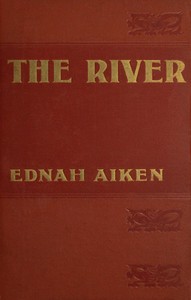
For The river — Key Ideas to Explore, the stored edition analysis reports 118,421 words, 8 hr 35 min estimated reading time, and 45 detected text sections.
The text analysis averages about 11.0 words per sentence, while the detected sections provide another way to judge how the source is divided.
Project Gutenberg metadata also associates the work with “Western stories,” connecting these edition facts with the source record’s subject description.
Explore this collection
These alternatives are selected using recorded categories and estimated reading time.
About 452 minutes
Adventure Picaresque Fiction
103,957 recorded words. 63 minutes difference from this book's estimate.
View Gutenberg source #71118About 391 minutes
Adventure Picaresque Fiction
89,843 recorded words. 124 minutes difference from this book's estimate.
View Gutenberg source #68802About 390 minutes
Adventure Picaresque Fiction
89,619 recorded words. 125 minutes difference from this book's estimate.
View Gutenberg source #69070Search stored excerpts and compare books → Choose by your preferences →
Choices use stored catalog measurements. Estimates vary with reading speed. A shared category is a catalog label, not a claim that two books have the same argument or literary quality.
Search reads excerpt text stored with this catalog and links to its associated Gutenberg record. The connection is stored in the site database; this tool does not recheck that every excerpt is word-for-word identical to that external record. Excerpt search does not cover every chapter and does not verify historical publication dates.
Catalog snapshot checked: 2026-09-25. Coverage: 100 public books, 100 available source excerpts.
Read the complete public-domain text at its original source.
Read on Project GutenbergFrom its first sentence, The River announces a preoccupation with tempo and appearance. The opening chapter clocks the exact moment—nine o'clock—as Casey Rickard's "dancing step" carries him into Tod Marshall's office. The narrator dwells on Rickard's London tie, white silk shirt, and pressed serge trousers, noting that Tucson clerks have not yet reached a verdict on this newcomer who once held a chair of engineering and later shoveled coal on a Wyoming engine. This early attention to dress and gait establishes a narrative voice that reads surfaces for clues about character and conflict.
The novel's language oscillates between clipped observation and longer, more agitated passages. In the desert hotel scene, the prose tightens around overheard fragments—"Subsidized by the O. P.!"—and the restless movement of heads and glasses. Aiken builds tension through small, concrete details: a gold lorgnette, a bald head "gleaming like a billiard ball," the set sneer on Hardin's mouth. The pace quickens as the meeting approaches, then slows again for Hardin's bitter interior monologue.
The narrator of The River rarely stays neutral. Descriptions carry an evaluative edge, especially toward the clerks who "carp" at Rickard's ribbons instead of shoelaces, or toward Hardin's "set sneer" and his resentment of the "eastern swells" with their lorgnettes. The prose often aligns itself with a character's perspective without fully adopting it, creating a layered effect. When Hardin thinks, "Where had they all been if it had not been for him?" the sentence slides into free indirect style, but the surrounding context—the clatter of voices, the wink that accompanies the whisper—keeps the reader aware of the crowded room. This technique gives the narrative a judgmental quality: it reports what characters see and feel, but also implies what they miss.
The voice is particularly attentive to status markers. Rickard's clothing is catalogued not because the narrator admires fashion, but because the clerks' scrutiny matters. Similarly, the "pale gray cloth" of Mrs. Youngberg's dress and the "leveling of gold lorgnettes" signal class divisions that will shape the water-rights dispute. The novel's language thus functions as a social barometer, registering shifts in power and allegiance through small, visible signs.
Aiken varies sentence length and paragraph rhythm to mirror the mounting pressure of the irrigation crisis. Early chapters move at a measured, almost leisurely pace, with room for descriptive set pieces like the clerk's appraisal of Rickard. But as the narrative approaches the hotel meeting, the prose becomes choppier, filled with fragments and interruptions: "Subsidized by the O. P.!" With the whisper ran a wink." The effect is cinematic—quick cuts between speakers, gestures, and muttered asides.
Later, during Hardin's brooding, the pace slows again. His thoughts unfold in longer, more aggrieved sentences: "He was a young man when he'd gone into this thing, and he was old now." This alternation between rapid social scenes and interior lulls gives the novel a distinctive rhythm. The excerpts suggest that Aiken uses pacing not merely for variety but to underscore the gap between public performance and private grievance. The meeting itself, when it finally begins, is described through Marshall's silken voice and Babcock's nervous watch-checking—small actions that stretch time and heighten anticipation.
Though the Colorado River gives the novel its title, it appears in the excerpts mainly through its absence or threat. Characters talk about the river—Brandon's editorial warns of a break, the Star pleads for cooperation—but the water itself is not described directly. Instead, the narrative focuses on the human response to its potential: the bankrupt Desert Reclamation Company, the railroad's assumption of responsibilities, the "incendiary excitement" of the water company meetings. The river functions as a pressure point, a force that exists offstage but drives every conversation.
This indirect treatment is a deliberate narrative choice. By keeping the river at the margins of the text, Aiken emphasizes the human drama of control and failure. The closest the excerpts come to the river's presence is in Hardin's bitter reflection: "I've made the valley!" The valley, not the river, is what he claims. The novel's language thus suggests that the real conflict is not with nature but with the competing claims of those who seek to manage it. The river remains a silent, indifferent actor, felt only through the anxiety it generates.
Readers approaching The River should attend to the way Aiken builds scenes through accumulation of small gestures—a wink, a watch-check, a sneer—rather than through dramatic set pieces. The novel's interest lies less in the outcome of the water-rights dispute than in the social and psychological pressures that shape each character's position. Because the excerpts cover only the early chapters, the full arc of the narrative remains unknown, but the pattern of alternating public debate and private resentment is already clear. The river itself may never become a vivid presence; its power is in what it makes people do.
Reading about Casey Rickard watching the Colorado River shift its banks reminded me of sitting on my grandfather's porch, hearing him talk about the irrigation fights that split our own valley. That same ache of contested water, of people clinging to what flows past them, surfaced later in The lion's share — Text and Context, where the land itself seemed to hold its breath between arguments. Both books left me staring out the window, feeling the weight of place.
A brief reflection can help important ideas stay with you longer.