About 365 minutes
The presidential snapshot — Story, Setting & Ideas
Adventure Picaresque Fiction
83,865 recorded words. 12 minutes difference from this book's estimate.
View Gutenberg source #70413
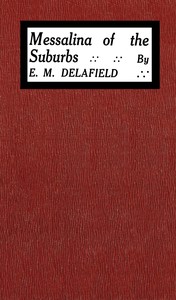
Before opening Messalina of the suburbs — Key Ideas to Explore, the edition data offers a quick orientation: 86,629 words, 6 hr 17 min estimated reading time, and 28 detected text sections.
The text analysis averages about 14.4 words per sentence, while the detected sections provide another way to judge how the source is divided.
Project Gutenberg metadata also associates the work with “Man-woman relationships -- Fiction,” connecting these edition facts with the source record’s subject description.
Explore this collection
These alternatives are selected using recorded categories and estimated reading time.
About 365 minutes
Adventure Picaresque Fiction
83,865 recorded words. 12 minutes difference from this book's estimate.
View Gutenberg source #70413About 390 minutes
Adventure Picaresque Fiction
89,619 recorded words. 13 minutes difference from this book's estimate.
View Gutenberg source #69070About 391 minutes
Adventure Picaresque Fiction
89,843 recorded words. 14 minutes difference from this book's estimate.
View Gutenberg source #68802Search stored excerpts and compare books → Choose by your preferences →
Choices use stored catalog measurements. Estimates vary with reading speed. A shared category is a catalog label, not a claim that two books have the same argument or literary quality.
Search reads excerpt text stored with this catalog and links to its associated Gutenberg record. The connection is stored in the site database; this tool does not recheck that every excerpt is word-for-word identical to that external record. Excerpt search does not cover every chapter and does not verify historical publication dates.
Catalog snapshot checked: 2026-09-25. Coverage: 100 public books, 100 available source excerpts.
Read the complete public-domain text at its original source.
Read on Project GutenbergE. M. Delafield's dedication frames Messalina of the Suburbs as an attempt to reconstruct the psychological developments that lead to murder, insisting that such catastrophes are never 'bolts from the blue.' The novel opens with a sharp domestic exchange: Elsie's mother accuses her of 'going with boys,' and Elsie's denials are met with immediate dismissal. The mother's voice—'Surely to goodness you're aware by this time that it's the heighth of bad manners to contradict'—establishes a world of petty authority and suppressed rebellion. The catalog subjects list 'Man-woman relationships' and 'Murder,' but the excerpts show that the story's tension lies less in the crime itself than in the accumulating pressures of class, family, and desire.
The opening scene is a masterclass in indirect characterization. Elsie's mother controls the conversation through repeated accusations—'I won't have you going with boys,' 'don't tell lies'—while Elsie responds with automatic tears and minimal protest. The mother's concern is not morality but appearance: she has 'taken trouble enough to try and make a lady of you.' Elsie's relief when the scolding ends quickly—'Sometimes mother went on for ages'—reveals a pattern of habitual conflict. The paying guest Mr. Roberts offers a sympathetic audience, and Elsie performs her distress for him, noting that she 'had not cried hard enough to make her nose turn red.' This early scene establishes a world where emotions are managed for social effect, and where the home offers no refuge from scrutiny.
The central love scene between Elsie and Leslie Morrison is rendered in heightened, almost melodramatic prose. They meet at a band concert, slipping away into 'the deep shadow of a clump of trees' where they are 'in an isolation as complete as though a curtain had fallen.' Their dialogue is full of declarations—'I love you,' 'I ought never to have married him'—but Delafield undercuts the passion with practical interruptions: the National Anthem plays, the crowd surges, and Elsie must manage her sister Geraldine's return. The scene's structure—intense privacy broken by public ritual—mirrors the novel's concern with the collision between inner desire and social performance. The lovers' plans remain vague ('We can settle—something—later on'), suggesting that the affair is driven more by escape than by genuine resolution.
Delafield's dialogue captures class-specific speech patterns with precision. Elsie's mother uses phrases like 'the heighth of bad manners' and 'crocodile tears,' while Elsie shifts between childish defiance ('I haven't, then!') and calculated appeal. The paying guests—Mr. Roberts, later Leslie Morrison—occupy a liminal space between family and stranger, offering Elsie an audience outside her mother's control. The catalog subject 'Teenagers -- Fiction' is misleading: Elsie is married by the time of the affair, but the novel's focus on her adolescence in Part I justifies the tag. The excerpts show a world where every interaction is freighted with class anxiety: the mother's desire to 'make a lady' of Elsie, the boarding-house setting, the careful management of social appearances. Delafield's dedication promises 'dissection' of personality, and the dialogue delivers it.
Readers should attend to the gap between what characters say and what the narrator implies. Delafield rarely editorializes; instead, she lets dialogue and gesture accumulate meaning. The excerpts offer no direct evidence of the murder itself, only the psychological groundwork. The novel's structure—a long opening story followed by shorter pieces—suggests that the title work is the core, with the remaining stories exploring related themes of constraint and transgression. Approach the text as a study in how ordinary pressures can lead to extraordinary acts.
Elsie Palmer’s fury, in Messalina of the Suburbs, always felt to me like a door left ajar—a thrum of longing turned sour. Years later, I found a quieter echo in The presidential snapshot — Story, Setting & Ideas, where a held breath, not a shout, shapes a life. Both books share that hush between what is said and what is suffered. I simply set them side by side on my shelf, and they seem to nod.
Create a short personal record of your experience with this book.