About 359 minutes
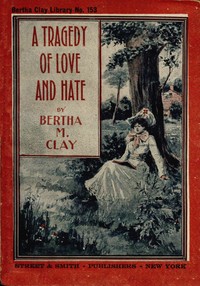
A tragedy of love and hate — Reading Companion
Adventure Picaresque Fiction
82,561 recorded words. 3 minutes difference from this book's estimate.
View Gutenberg source #71769
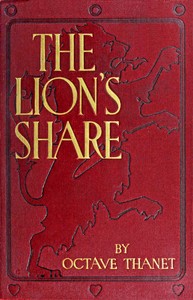
For The lion's share — Text and Context, the stored edition analysis reports 81,691 words, 5 hr 56 min estimated reading time, and 25 detected text sections.
The text analysis averages about 16.7 words per sentence, while the detected sections provide another way to judge how the source is divided.
Project Gutenberg metadata also associates the work with “Revenge -- Fiction,” connecting these edition facts with the source record’s subject description.
Explore this collection
These alternatives are selected using recorded categories and estimated reading time.
About 359 minutes
Adventure Picaresque Fiction
82,561 recorded words. 3 minutes difference from this book's estimate.
View Gutenberg source #71769About 365 minutes
Adventure Picaresque Fiction
83,865 recorded words. 9 minutes difference from this book's estimate.
View Gutenberg source #70413About 377 minutes
Adventure Picaresque Fiction
86,629 recorded words. 21 minutes difference from this book's estimate.
View Gutenberg source #69669Search stored excerpts and compare books → Choose by your preferences →
Choices use stored catalog measurements. Estimates vary with reading speed. A shared category is a catalog label, not a claim that two books have the same argument or literary quality.
Search reads excerpt text stored with this catalog and links to its associated Gutenberg record. The connection is stored in the site database; this tool does not recheck that every excerpt is word-for-word identical to that external record. Excerpt search does not cover every chapter and does not verify historical publication dates.
Catalog snapshot checked: 2026-09-25. Coverage: 100 public books, 100 available source excerpts.
Read the complete public-domain text at its original source.
Read on Project GutenbergOctave Thanet opens The Lion's Share with a startling tableau: a Harvard dormitory room, a revolver, a broken bottle, and a young man slumped over a study table. The scene is rendered through the eyes of Colonel Rupert Winter, whose West Point-trained gaze notes marble wainscoting and tiled floors before the crack of a pistol shifts his attention. Thanet's diction is precise—'the sharp bark of a pistol, followed by a thud, and a crackle as of breaking glass'—and her dialogue cuts quickly, as when the colonel asks, 'Do you fellows amuse yourselves shooting up the dormitory?' This opening establishes a pattern of sensory detail and economical speech that carries through the novel.
Thanet's prose is built on concrete nouns and active verbs. The colonel's perspective is filtered through military observation: he notes 'marble wainscoting and tiled floors' and contrasts them with West Point. Later, Aunt Rebecca's pursuit of a hack is described with similar exactness—'a shabby sort of hack ... drawn by two horses with auburn tails.' The color 'auburn' recurs, becoming a visual thread. Thanet avoids abstract commentary; instead, she lets physical details carry meaning. When Mrs. Winter commands a motor-car, her speech is blunt: 'Twenty dollars an hour if you let me get in now!' The chauffeur's response—'Hey, me? what!'—captures his surprise in two words. This economy of language extends to description: 'a dusty body of a hack a block away' conveys both distance and decay.
Dialogue in the excerpts drives the plot and reveals character without exposition. Mrs. Winter's imperious 'I don't care to whom it belongs, I have to have it' establishes her determination, while Janet Smith's interjection—'It's a case of kidnapping. You catch that cab!'—shifts the scene's urgency. The Iowa banker's response—'Case of kidnapping, hey? ... Take the auto, Madam'—shows quick comprehension and decisiveness. Thanet uses interruptions and overlapping speech to create a sense of real-time action. The chauffeur's boast—'I see 'em, lady; I see the red tails; I'll catch 'em!'—is undercut by the overturned orange-wagon, a detail that introduces obstacle and suspense. The author's ear for vernacular is evident in phrases like 'Get a move on you, Mr. Chauffeur!' and the motorman's 'curses,' which are reported but not transcribed, leaving the reader to infer the tone.
Thanet structures the pursuit sequence around a series of small setbacks that heighten tension. The motor-car's initial advantage is lost when 'an orange-wagon which had been overturned' forces a halt. The description of the chase is methodical: 'The episode took barely a couple of minutes, but on the edge of the last minute the cab turned a corner.' The narrative then follows the motor-car's search through 'two adjacent highways' before sighting the hack again, only to have it turn another corner. This pattern of near-capture and delay is a deliberate structural choice, mirroring the novel's larger plot of pursuit and evasion. The author also uses perspective shifts: the reader sees the cab from Mrs. Winter's viewpoint, but also glimpses the man in the black derby hat who 'turned half around ... almost as if he looked back at his pursuers.' This ambiguity—'almost as if'—leaves the motive unclear, a technique Thanet employs to sustain mystery.
Two details recur in the excerpts: the 'auburn tails' of the horses and the 'black derby hat' of the man in the cab. The auburn tails are mentioned three times—first as 'horses with auburn tails,' then as 'the red tails,' and finally as 'a swish of red.' This repetition turns a minor visual element into a guiding signal, a kind of oriflamme that Mrs. Winter and the reader both track. The black derby hat, by contrast, is associated with the kidnapper's anonymity; it is 'a man wearing a black derby hat' who sticks his head out the window. Thanet does not describe his face, only the hat, making it a marker of menace. These recurring details function as narrative anchors in a fast-moving story. The author also embeds the 1906 San Francisco earthquake as a backdrop, though the excerpts do not yet show it; the catalog confirms its role, suggesting that natural disaster will intersect with the kidnapping plot.
Thanet's authorial choices—her precise diction, her dialogue-driven action, her structural use of setbacks, and her reliance on recurring visual details—create a narrative that moves with the urgency of a chase. Readers attentive to these craft elements will find a story that rewards close observation of language and structure. The excerpts offer only a fragment of the plot, but they reveal a writer in full command of her tools, building suspense through the accumulation of concrete, telling particulars.
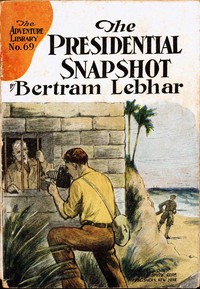
That afternoon, the rain drummed a soft rhythm against the windows while I followed Colonel Winter through the smoky chaos of old San Francisco. The way his clipped, precise voice cut through the rubble stayed with me longer than I expected. Later, thumbing through The presidential snapshot — Story, Setting & Ideas, I found the same quiet attention to how people speak, how a single word can tilt a scene. It felt less like a discovery and more like an echo.
Use these questions to collect your thoughts before moving on.