About 160 minutes
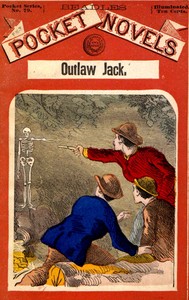
Outlaw Jack; or, the mountain devil — Story, Setting & Ideas
Adventure Picaresque Fiction
36,795 recorded words. 37 minutes difference from this book's estimate.
View Gutenberg source #68673
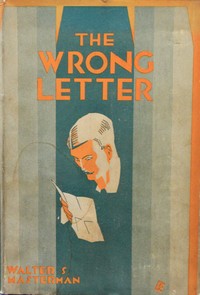
Before opening The wrong letter — Key Ideas to Explore, the edition data offers a quick orientation: 45,300 words, 3 hr 17 min estimated reading time, and 21 detected text sections.
The text analysis averages about 12.2 words per sentence, while the detected sections provide another way to judge how the source is divided.
Project Gutenberg metadata also associates the work with “Detective and mystery stories,” connecting these edition facts with the source record’s subject description.
Explore this collection
These alternatives are selected using recorded categories and estimated reading time.
About 160 minutes
Adventure Picaresque Fiction
36,795 recorded words. 37 minutes difference from this book's estimate.
View Gutenberg source #68673About 240 minutes
Adventure Picaresque Fiction
54,996 recorded words. 43 minutes difference from this book's estimate.
View Gutenberg source #70755About 267 minutes
Adventure Picaresque Fiction
61,308 recorded words. 70 minutes difference from this book's estimate.
View Gutenberg source #73416Search stored excerpts and compare books → Choose by your preferences →
Choices use stored catalog measurements. Estimates vary with reading speed. A shared category is a catalog label, not a claim that two books have the same argument or literary quality.
Search reads excerpt text stored with this catalog and links to its associated Gutenberg record. The connection is stored in the site database; this tool does not recheck that every excerpt is word-for-word identical to that external record. Excerpt search does not cover every chapter and does not verify historical publication dates.
Catalog snapshot checked: 2026-09-25. Coverage: 100 public books, 100 available source excerpts.
Read the complete public-domain text at its original source.
Read on Project GutenbergG. K. Chesterton’s preface to The Wrong Letter sets an unusual challenge: he claims the story deceived him, and that a detective novel’s true pleasure lies in being “gullible.” This framing primes the reader to watch for misdirection. The narrative itself opens with a murder investigation, but the excerpts show a story that often slows to observe characters in static, watchful moments—Collins studying a portrait, or noting a “swift glance” between Mabel and Allery. The pace is not uniform; it alternates between clipped dialogue and prolonged, solitary reflection.
Collins, the central figure in the excerpts, is less an active detective than a deliberate observer. He “watched each in turn” during a bridge game, and later “wandered round the house like a nocturnal cat.” His former profession as a barrister colours his cynicism: “If a man once gets into the clutches of the Law it doesn’t matter much whether he’s guilty or not.” This voice gives the story a sceptical, almost weary tone. The narrative often follows his gaze—at Mabel’s “expressive face,” at the portrait of Sir James, at the “inscrutable smile” of Allery. The reader is placed alongside him, piecing together clues from behaviour rather than action.
The excerpts contain several exchanges that advance the plot through implication rather than direct statement. When Mabel asks about the suspect’s fate, Collins replies, “If he’s guilty,” and she responds, “Do you mean whether he is guilty or not? But that is too dreadful.” This back-and-forth reveals a shared unease about justice. Later, a quiet voice at Collins’s elbow—“It’s a very good likeness, and cleverly painted, isn’t it?”—introduces Allery with a line that seems casual but carries weight. The dialogue often feels like a game of veiled meanings, where characters speak around the truth. The pace quickens in these exchanges, then slows again when Collins retreats into thought.
A recurring detail in the excerpts is the portrait of Sir James, which Collins studies intently. He notes “a strange mixture of hardness and sympathy,” and the lawyer Allery agrees: “He was a contradiction, but his intellect always ruled his emotions.” This moment of character analysis mirrors the story’s larger puzzle—people are not what they seem. The title itself points to a missing letter, a physical object that may alter the investigation. The excerpts do not reveal its contents, but the emphasis on observation and misreading suggests that the letter, like the portrait, will require careful interpretation. The narrative’s pace here is meditative, a pause before the next turn.
Readers should attend to the spaces between events—the moments when Collins stands still, or when a glance passes between characters. The story rewards patience and a suspicious eye. Chesterton’s preface promises a puzzle that holds up to scrutiny, and the excerpts suggest that the solution lies not in dramatic revelations but in the quiet accumulation of detail.
There’s a particular hush in The Wrong Letter, that long moment before the portrait shifts meaning. Years later, I found that same quiet waiting in Thicker than water — A Closer Reading, where loyalty wears a stranger’s face. Both understand that restraint, that patient observation before judgment. A kinship, really, of held breath.
Save your reaction, strongest insight, and memorable passage.