About 267 minutes
Of no account — Key Ideas to Explore
Adventure Picaresque Fiction
61,308 recorded words. 7 minutes difference from this book's estimate.
View Gutenberg source #73416
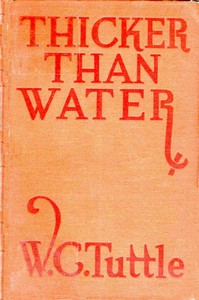
Thicker than water — A Closer Reading can be approached with a clearer sense of reading commitment from its source measurements: 63,002 words, 4 hr 34 min estimated reading time, and 7 detected text sections.
The text analysis averages about 11.0 words per sentence, while the detected sections provide another way to judge how the source is divided.
Project Gutenberg metadata also associates the work with “Western stories,” connecting these edition facts with the source record’s subject description.
Explore this collection
These alternatives are selected using recorded categories and estimated reading time.
About 267 minutes
Adventure Picaresque Fiction
61,308 recorded words. 7 minutes difference from this book's estimate.
View Gutenberg source #73416About 304 minutes
Adventure Picaresque Fiction
69,796 recorded words. 30 minutes difference from this book's estimate.
View Gutenberg source #70089About 240 minutes
Adventure Picaresque Fiction
54,996 recorded words. 34 minutes difference from this book's estimate.
View Gutenberg source #70755Search stored excerpts and compare books → Choose by your preferences →
Choices use stored catalog measurements. Estimates vary with reading speed. A shared category is a catalog label, not a claim that two books have the same argument or literary quality.
Search reads excerpt text stored with this catalog and links to its associated Gutenberg record. The connection is stored in the site database; this tool does not recheck that every excerpt is word-for-word identical to that external record. Excerpt search does not cover every chapter and does not verify historical publication dates.
Catalog snapshot checked: 2026-09-25. Coverage: 100 public books, 100 available source excerpts.
Read the complete public-domain text at its original source.
Read on Project GutenbergFrom its first scene—a tense card game between a scarred father and his perfumed son—Thicker Than Water signals that its conflicts are as much domestic as they are criminal. The catalog labels it a western adventure story about robbers and outlaws, and the excerpts do feature a train robbery, a missing horse, and a diamond heist. But the dialogue and character descriptions lean heavily on family betrayal: Angel McCoy learns Lila is not his sister, Rance McCoy taunts a banker about stolen money, and the recurring phrase “thicker than water” hangs over every confrontation. The prose is lean, with short sentences and a fondness for physical detail—scars, skin color, the smell of perfume—that gives the violence a personal edge.
The excerpts introduce characters through stark, almost emblematic details. Rance McCoy has “scars on his face, which showed lighter than the rest of his skin; scars of many battles” and a skin “the color of jerked venison.” His son Angel wears “a white silk shirt, with a red handkerchief knotted around his throat” and carries “an odor of perfume.” These physical markers do more than describe—they signal moral and temperamental differences. Rance is weathered, violent, and direct; Angel is vain, secretive, and possibly duplicitous. The narrative voice treats these details without irony, trusting the reader to read character from appearance. Even minor figures like Butch Reimer are introduced through their reactions: “Butch Reimer blinked slowly, thoughtfully” when confronted. The prose favors concrete nouns and active verbs, rarely pausing for introspection. This technique aligns with the western genre’s emphasis on action over psychology, but the excerpts show that Tuttle uses it to build tension around hidden relationships, not just gunplay.
A striking feature of the dialogue is how much remains unsaid. Characters often speak in half-confessions and loaded silences. When Angel says, “I knew all along that Lila wasn’t my sister,” the revelation is delivered flatly, without dramatic buildup. Rance’s response—“That drunken thief!”—refers not to Lila’s father but to the man who told Angel the truth. The reader must infer the backstory from fragments. Similarly, Rance’s outburst at the bank—“I jist wanted to tell yuh that yore bank won’t never handle the money I stole from the Wells Fargo”—is a taunt that may or may not be true. The excerpts do not confirm whether he actually committed the robbery. This ambiguity is deliberate: the narrative withholds key facts, forcing the reader to weigh each character’s word against their actions. The catalog subject “Robbers and outlaws — Fiction” fits, but the excerpts suggest the real puzzle is not who stole the diamonds but why the characters lie about what they know.
The excerpts use setting sparingly but effectively. The opening scene takes place in “the living-room of the Circle Spade ranch-house, in the light of a single oil lamp.” This confined, dim space forces the father-son confrontation into close focus. Later scenes shift to a saloon, a bank, and a courthouse—each a public arena where private conflicts spill out. The saloon, with its roulette wheel and bar, becomes a place for veiled threats: “Right now it is, Reimer. It may change any time.” The bank is where Rance makes his provocative admission. The courthouse is where he challenges the lawyer Merkle. These are not picturesque landscapes; they are functional stages for verbal and psychological duels. The catalog lists “Western stories” and “Adventure stories,” but the excerpts show that adventure here means not just pursuit and gunfights but the risky business of speaking truth in a world where everyone has something to hide.
The excerpts from Thicker Than Water suggest a story that uses western conventions—train robberies, horse trades, saloon confrontations—to explore family loyalty and buried secrets. Readers should pay close attention to what characters don’t say: the gaps in dialogue, the half-truths, and the sudden shifts in topic. The narrative rewards careful reading of physical details and repeated phrases. Whether the diamonds are ever recovered or the father-son rift healed remains unclear from these passages, but the pleasure lies in watching Hashknife Hartley piece together the fragments.
The rain drummed on the window that afternoon while I finished Thicker than Water, lingering on that scarred father and son. Something in their silence stayed with me—how love bruises. I set it down, and my hand drifted to another slim volume, almost without thinking: A tragedy of love and hate — Reading Companion. It felt less like a choice than an echo.
Capture what you thought, learned, and would like to remember.