About 333 minutes
The salon and English letters — Story, Setting & Ideas
Adventure Picaresque Fiction
76,560 recorded words. 2 minutes difference from this book's estimate.
View Gutenberg source #71916
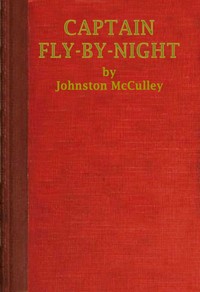
This digital edition of Captain Fly-by-Night — Key Ideas to Explore is described by source-level measurements including 75,949 words, 5 hr 31 min estimated reading time, and 28 detected text sections.
The text analysis averages about 14.9 words per sentence, while the detected sections provide another way to judge how the source is divided.
Project Gutenberg metadata also associates the work with “Western stories,” connecting these edition facts with the source record’s subject description.
Explore this collection
These alternatives are selected using recorded categories and estimated reading time.
About 333 minutes
Adventure Picaresque Fiction
76,560 recorded words. 2 minutes difference from this book's estimate.
View Gutenberg source #71916About 356 minutes
Adventure Picaresque Fiction
81,691 recorded words. 25 minutes difference from this book's estimate.
View Gutenberg source #68875About 304 minutes
Adventure Picaresque Fiction
69,796 recorded words. 27 minutes difference from this book's estimate.
View Gutenberg source #70089Search stored excerpts and compare books → Choose by your preferences →
Choices use stored catalog measurements. Estimates vary with reading speed. A shared category is a catalog label, not a claim that two books have the same argument or literary quality.
Search reads excerpt text stored with this catalog and links to its associated Gutenberg record. The connection is stored in the site database; this tool does not recheck that every excerpt is word-for-word identical to that external record. Excerpt search does not cover every chapter and does not verify historical publication dates.
Catalog snapshot checked: 2026-09-25. Coverage: 100 public books, 100 available source excerpts.
Read the complete public-domain text at its original source.
Read on Project GutenbergThe novel opens with a vivid tableau of siesta-hour stagnation: Sergeant Carlos Cassara, purple-faced from wine, snores on a dirt floor while an Indian neophyte feigns drowsiness. McCulley immediately establishes a world of decadent peace, noting that the calm is "uncertain" and "like to be broken at any time." The prose lingers on sensory details—red dust, a lazy fountain, the green Pacific—before introducing the central figure, Captain Fly-by-Night, through a note left on the sergeant's belt. This early juxtaposition of inertia and covert action sets the narrative's rhythmic alternation between languid description and sudden, tense movement.
McCulley employs a third-person narrator who freely moves between characters' perspectives, often within a single scene. In Chapter I, the reader sees the barracks through the neophyte's "eyelids that seemed about to close," then shifts to the sergeant's drunken stupor, and finally to the broader historical commentary on Mexican rule and Indian resentment. This omniscient voice occasionally adopts a sardonic tone—"dissolute men created an atmosphere that combatted that created by the frailes"—which undercuts the romantic setting. The narrator also directly addresses the reader with asides like "as all men knew," creating a sense of shared understanding. Later chapters, such as Chapter XII, narrow to dialogue-heavy exchanges between Rojerio Rocha and Señor Lopez, where the narrator recedes and the conflict emerges through argument rather than description. This variation in narrative distance keeps the reader attuned to both the political backdrop and personal stakes.
The story's rhythm is built on sharp contrasts between static, descriptive passages and bursts of action. The opening chapter devotes several paragraphs to the heat, dust, and sleeping soldiers before the neophyte's subtle glance and the discovery of the note jolt the narrative forward. McCulley often uses physical details to signal a shift: a snore, a dropped palm-leaf, a hand fumbling with bonds. In Chapter XI, the tension escalates through a series of short, declarative sentences as Captain Fly-by-Night leaves a message: "He waved a hand in salute and passed out into the night." The following chapter, "A Tragedy," begins with a long, static argument about the wisdom of traveling to a rancho, only to pivot abruptly to violence. This pattern of extended calm punctuated by sudden crisis mirrors the precarious peace of the setting itself, where "the spirit of present peace" is always on the verge of breaking.
Two motifs recur throughout the excerpts: disguise and written communication. Captain Fly-by-Night operates through anonymity, leaving notes rather than revealing himself. The note in Chapter I is a "bit of advice given freely," while later messages serve as taunts or warnings. The act of reading—Sergeant Cassara tearing the paper from his belt, the comandante receiving intelligence—becomes a plot engine. Disguise extends to identity: Rojerio Rocha is mistaken for someone else, and the neophyte's loyalty is uncertain. McCulley underscores this theme with the repeated phrase "the man known as," which appears in both the note and the chapter titles. Even the setting participates in this motif: the mission walls hide conspirators, and the highway is empty of honest travelers. These elements create a world where nothing is as it seems, and the reader, like the characters, must piece together truth from fragments.
Readers should pay attention to the way McCulley uses the physical environment—heat, dust, shadows—to mirror the characters' psychological states. The novel's title character remains deliberately elusive, and the narrative rewards careful observation of who speaks, who watches, and who writes. The excerpts suggest a story less concerned with the outlaw's identity than with the atmosphere of suspicion he generates.
There’s something about the way McCulley’s outlaws wear their secrets like dust, every identity a shift in the light. That unease stayed with me. Drifted ashore; — Themes and Context feels like that same salt-worn patience, the quiet waiting for a tide to turn, never quite showing its whole face.
Create a short personal record of your experience with this book.