About 30 minutes
The lucky little stiff — Edition Insights
Utopias Future Societies Other Worlds
6,817 recorded words. 14 minutes difference from this book's estimate.
View Gutenberg source #73484
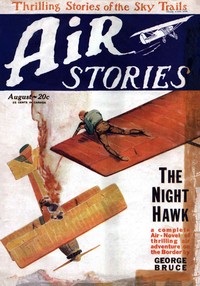
This digital edition of Plane Jane — Text and Context is described by source-level measurements including 10,066 words, 44 min estimated reading time, and 1 detected text section.
The text analysis averages about 15.0 words per sentence, while the detected sections provide another way to judge how the source is divided.
Project Gutenberg metadata also associates the work with “Short stories,” connecting these edition facts with the source record’s subject description.
Explore this collection
These alternatives are selected using recorded categories and estimated reading time.
About 30 minutes
Utopias Future Societies Other Worlds
6,817 recorded words. 14 minutes difference from this book's estimate.
View Gutenberg source #73484About 63 minutes
Utopias Future Societies Other Worlds
14,454 recorded words. 19 minutes difference from this book's estimate.
View Gutenberg source #71203About 160 minutes
Utopias Future Societies Other Worlds
36,578 recorded words. 116 minutes difference from this book's estimate.
View Gutenberg source #72971Search stored excerpts and compare books → Choose by your preferences →
Choices use stored catalog measurements. Estimates vary with reading speed. A shared category is a catalog label, not a claim that two books have the same argument or literary quality.
Search reads excerpt text stored with this catalog and links to its associated Gutenberg record. The connection is stored in the site database; this tool does not recheck that every excerpt is word-for-word identical to that external record. Excerpt search does not cover every chapter and does not verify historical publication dates.
Catalog snapshot checked: 2026-09-25. Coverage: 100 public books, 100 available source excerpts.
Read the complete public-domain text at its original source.
Read on Project GutenbergThe story opens with Benny, a mechanic, describing Jane Alton as a woman who looks her best in a flying suit—"born to ornament the air." Through his admiring, colloquial voice, we learn that Jane is the daughter of the plant owner, a licensed pilot, and determined to fly the front seat of a plane during a check-ride, overruling her instructor Ned Knight. The opening establishes a love triangle hinted at by Benny, who considers himself "just her slave" while Ned, the handsomest flyer, gets more of her time.
The entire story is filtered through Benny's folksy, first-person narration. His speech is marked by contractions like "ain't" and colloquialisms such as "ol' nut-twister" and "grease-monkey." This voice gives the reader an intimate, ground-level perspective on the events, but also limits what we know—Benny is not a pilot, so technical details are simplified. His self-deprecating humor and obvious admiration for Jane color every scene, making the reader aware that the story is as much about his unrequited affection as it is about the race.
Jane repeatedly challenges the men around her. In the opening, she insists on piloting the plane herself, countering Ned's protests with pointed questions about her license and skill. Later, during the race, she removes her helmet and taps Ned's shoulder, forcing him to acknowledge her presence and share the joy of flying. When the Impco pilot falls behind, she "gaily waved" and "threw him a couple of kisses," a gesture that is both playful and defiant. These moments show Jane using charm and persistence to carve out her role in a world where women pilots are rare.
The cross-country race is described in vivid, sensory detail: the "poppin' and roarin' of motors," the "wires shrieking," and the plane "trembling and throbbing." Planes drop out one by one—disabled, disqualified—while the Alton, Stormbird, and Impco battle for the lead. The narrative focuses on the mechanical strain and the pilots' concentration, with Ned "concentrated on his controls as he had never concentrated before." The race is not just a contest of speed but of endurance, where machines and humans are pushed to their limits.
Benny admits he doesn't know everything: "What's happenin' to Ned and Jane now, I wonder?" He then says, "Well, plenty happened in that plane on the way, and this is what!"—but the excerpts cut off before revealing the full outcome. This narrative gap is a deliberate technique, leaving the reader to infer that Benny is recounting events secondhand or imagining them. The incomplete excerpts prevent us from knowing who wins the race or how the relationship between Jane, Ned, and Benny resolves, but the story's structure suggests a focus on the journey rather than the destination.
Readers should pay attention to how Benny's limited perspective shapes the story—he is a mechanic, not a pilot, and his admiration for Jane may color his account. The excerpts leave the race's conclusion and the romantic tensions unresolved, so approach the full text as a character-driven adventure where the narrator's voice is as important as the plot. The story rewards attention to its period slang and the dynamics between the three main characters.
There’s a moment in Plane Jane where Benny watches Jane wipe oil from her hands before the race, and I thought of the quiet patience in Harvard episodes — Reading Companion—how both books let you sit beside someone finding their footing. Not heroic, just steady. That pause felt familiar, like remembering a friend’s voice without meaning to.
A brief reflection can help important ideas stay with you longer.