About 237 minutes
Angel Esquire — Text and Context
Utopias Future Societies Other Worlds
54,384 recorded words. 13 minutes difference from this book's estimate.
View Gutenberg source #72316
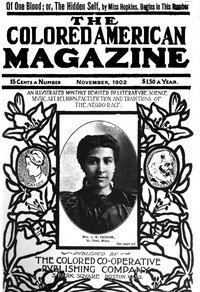
Before opening Of one blood: or, The hidden self — Background and Themes, the edition data offers a quick orientation: 57,361 words, 4 hr 10 min estimated reading time, and 26 detected text sections.
The text analysis averages about 17.1 words per sentence, while the detected sections provide another way to judge how the source is divided.
Project Gutenberg metadata also associates the work with “Paranormal fiction,” connecting these edition facts with the source record’s subject description.
Explore this collection
These alternatives are selected using recorded categories and estimated reading time.
About 237 minutes
Utopias Future Societies Other Worlds
54,384 recorded words. 13 minutes difference from this book's estimate.
View Gutenberg source #72316About 265 minutes
Utopias Future Societies Other Worlds
60,760 recorded words. 15 minutes difference from this book's estimate.
View Gutenberg source #68767About 223 minutes
Utopias Future Societies Other Worlds
51,266 recorded words. 27 minutes difference from this book's estimate.
View Gutenberg source #69636Search stored excerpts and compare books → Choose by your preferences →
Choices use stored catalog measurements. Estimates vary with reading speed. A shared category is a catalog label, not a claim that two books have the same argument or literary quality.
Search reads excerpt text stored with this catalog and links to its associated Gutenberg record. The connection is stored in the site database; this tool does not recheck that every excerpt is word-for-word identical to that external record. Excerpt search does not cover every chapter and does not verify historical publication dates.
Catalog snapshot checked: 2026-09-25. Coverage: 100 public books, 100 available source excerpts.
Read the complete public-domain text at its original source.
Read on Project GutenbergThe novel opens in a November rainstorm in Boston, where Reuel Briggs sits in a bare room, reading a book called “The Unclassified Residuum” and contemplating suicide. The dreary setting—sleet against the panes, yellow leaves on deserted paths—mirrors his isolation. Hopkins immediately establishes a tension between material hardship and mystical inquiry: Reuel is a medical student who studies “absurdities of supernatural phenomena,” and his suicidal thoughts are interrupted by a pull toward hidden knowledge. The chapter’s close focus on his physical surroundings and inner turmoil sets a pattern of movement between external bleakness and internal exploration.
The narrative moves from Reuel’s cramped Boston quarters to the expansive ruins of Meroe, Ethiopia. The transition is abrupt: the early chapters dwell on urban gloom, while later passages describe “magnificent groups of pyramids rising above pyramids” and “sepulchres” with arched roofs and keystones. Hopkins contrasts the “desolateness” of Reuel’s apartment with the “wonder and grandeur” of ancient structures. The shift is not merely geographic but tonal—the prose becomes more expansive, dwelling on hieroglyphics, sculptures, and the “origin of that discovery” of the arch. This movement suggests that the hidden self Reuel seeks is tied to a lost civilization, not just personal psychology.
Throughout the excerpts, images of death and preservation recur. In Boston, Reuel contemplates suicide and the “wail of the newly-born” filling gaps left by the dead. In Meroe, the explorers find pyramids “places of sepulture” and learn that Ethiopians preserved bodies in glass cases “to have them always before their eyes.” The novel links personal mortality with cultural memory: Reuel’s morbid thoughts echo the ancient practice of keeping the dead visible. Hopkins also describes a queen holding “the lash of Osiris” and a lotus flower, blending funerary and royal imagery. These details create a pattern where death is not an end but a form of continuity—a theme that resonates with Reuel’s own hidden heritage.
Hopkins often slows the narrative for detailed observation. In Boston, the narrator notes the “bareness and desolateness” of Reuel’s room and the “leaden sky.” In Ethiopia, the explorers are “demoralized as to routine work” by the ruins, and the text lingers on the queen’s attire: “long robe, tight at neck and ankles, with closely fitted legs.” The hair of women is “dressed in curls above the forehead and in ringlets hanging on their shoulders.” These descriptions serve a dual purpose: they ground the fantastical elements in concrete detail, and they emphasize the act of seeing as a way of uncovering truth. The narrator’s eye moves from the general to the specific, mirroring Reuel’s own search for hidden meaning beneath surfaces.
The novel frequently shifts between Reuel’s internal state and external landscapes. Early on, his “attention wandered beyond the leaden sky” while reading; later, the explorers are “lost in admiration and wonder” at the pyramids. This oscillation suggests that the hidden self is both psychological and historical. Hopkins uses weather and architecture as external correlatives: Boston’s storm reflects Reuel’s turmoil, while Meroe’s monuments evoke a lost grandeur that corresponds to his buried identity. The movement is not linear but circular—Reuel’s journey outward to Ethiopia is also a journey inward, toward the “hidden self” of the title. The structure thus reinforces the idea that personal and collective pasts are intertwined.
Readers should attend to how Hopkins uses setting as a mirror for consciousness. The novel’s movement between cramped interiors and vast ruins is not merely scenic but structural, linking Reuel’s psychological state to a broader racial history. The recurring images of burial and preservation invite reflection on what is hidden and what is kept visible. As you read, note how the descriptions of artifacts and architecture echo the early scenes of isolation—they are not separate but part of a single inquiry into identity and origin.
Reading about Reuel’s hidden knowledge beneath the Boston gloom, I found myself recalling the quiet, puzzle-box atmosphere of Angel Esquire — Text and Context. Both feel like rooms where a secret waits patiently, not for a shout, but for a listener. It’s a soft echo, more feeling than argument. Strange how one story’s shadow can remind you so gently of another’s light.
Create a short personal record of your experience with this book.