About 250 minutes
Of one blood: or, The hidden self — Background and Themes
Utopias Future Societies Other Worlds
57,361 recorded words. 13 minutes difference from this book's estimate.
View Gutenberg source #69255
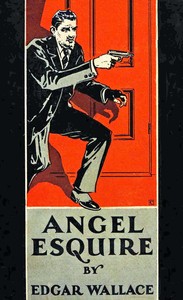
Before opening Angel Esquire — Text and Context, the edition data offers a quick orientation: 54,384 words, 3 hr 57 min estimated reading time, and 22 detected text sections.
The text analysis averages about 14.6 words per sentence, while the detected sections provide another way to judge how the source is divided.
Project Gutenberg metadata also associates the work with “Detective and mystery stories,” connecting these edition facts with the source record’s subject description.
Explore this collection
These alternatives are selected using recorded categories and estimated reading time.
About 250 minutes
Utopias Future Societies Other Worlds
57,361 recorded words. 13 minutes difference from this book's estimate.
View Gutenberg source #69255About 223 minutes
Utopias Future Societies Other Worlds
51,266 recorded words. 14 minutes difference from this book's estimate.
View Gutenberg source #69636About 265 minutes
Utopias Future Societies Other Worlds
60,760 recorded words. 28 minutes difference from this book's estimate.
View Gutenberg source #68767Search stored excerpts and compare books → Choose by your preferences →
Choices use stored catalog measurements. Estimates vary with reading speed. A shared category is a catalog label, not a claim that two books have the same argument or literary quality.
Search reads excerpt text stored with this catalog and links to its associated Gutenberg record. The connection is stored in the site database; this tool does not recheck that every excerpt is word-for-word identical to that external record. Excerpt search does not cover every chapter and does not verify historical publication dates.
Catalog snapshot checked: 2026-09-25. Coverage: 100 public books, 100 available source excerpts.
Read the complete public-domain text at its original source.
Read on Project GutenbergEdgar Wallace opens Angel Esquire with a solicitor's mundane property purchase, swiftly undercut by the revelation that the site will house a safe holding a fortune—and that the combination is locked in a cryptic verse. The novel's early chapters establish a world where legal formalities and criminal scheming coexist uneasily, with Wallace's prose moving between dry procedural detail and terse, menacing dialogue. The author's choice to introduce the cryptogram through a will, rather than a direct threat, sets a puzzle-box structure that prioritizes intellectual contest over physical action.
Wallace's London is a city of stark linguistic contrasts. The solicitor Spedding speaks in measured, professional clauses—'the property came into the market in the conventional way'—while the criminals of the 'Borough Lots' gang use a clipped, conspiratorial register: 'We can arrange about the guard.' This division is not merely social; it reflects the novel's central tension between lawful order and opportunistic violence. The narrator's own voice, occasionally slipping into direct address ('as a matter of exact detail'), mimics the authoritative tone of a police report, reinforcing the Scotland Yard perspective. Yet Wallace undercuts this authority by giving the gang members their own moments of sharp, idiomatic speech, as when Connor sorts notes 'into little bundles on the table' with a quiet efficiency that mirrors official procedure.
The doggerel verse that hides the safe's combination is more than a plot device; it is a stylistic signature of the novel's method. Wallace embeds the puzzle in a will, a legal document that itself becomes a kind of code. The verse is described as 'a bit of doggerel'—dismissive language that belies its importance. This tension between the trivial and the consequential recurs throughout the excerpts: old George, a mad scholar, mutters Latin tags ('Omnia mutantur, nos et mutamur in illis') that may or may not hold clues. Wallace uses the cryptogram to blur the line between meaningful pattern and random noise, forcing both characters and readers to weigh every word. The lawyer Spedding's desperate question—'The book, the book! What was the name of your book?'—shows how even a forgotten title can become a potential key.
Wallace differentiates characters through vocal tics and levels of coherence. Old George's speech oscillates between 'inaudibility' and 'cracked laugh,' his Latin quotations signaling a learned mind now disordered. In contrast, the stranger's voice is described as 'shortly' spoken, then 'fiercely' whispered, revealing agitation beneath control. The narrator's own voice remains steady, even when describing violence, creating a cool distance that heightens the menace of the gang's whispered plans. Notably, the excerpts show no direct dialogue from Angel Esquire himself; he is introduced through his actions—reading a letter, examining a map, ordering files—suggesting a character defined by observation rather than speech. This choice positions him as an interpretive center, a reader of clues and people alike.
The novel's chapter titles—'The Cryptogram,' 'The Red Envelope,' 'The Great Attempt'—function as signposts, but Wallace's narrative voice often withholds key information, mimicking the detective's own gradual discovery. The excerpts show a preference for scene-setting over immediate revelation: the first chapter devotes several paragraphs to the purchase of a building before mentioning the safe. This deliberate pacing forces the reader to attend to detail, much as Angel must. The inclusion of a 'thick folder bulging with papers' and 'dreadful photographs' in Chapter IX suggests that the novel's method is cumulative, building a case file rather than a simple chase. Wallace's authorial choices—the dry legal opening, the fragmented dialogue, the embedded puzzle—invite the reader to become an active participant in the investigation.
Readers approaching Angel Esquire will find a mystery that rewards attention to language: the cryptogram is only the most obvious of the novel's codes. Wallace's diction, from the solicitor's formality to the gang's slang, creates a London where every register carries potential meaning. The author's refusal to grant any single character full explanatory power—not even the titular detective—leaves the reader to weigh evidence alongside Angel. Approach the text as a puzzle box of voices, and the solution may emerge not from the safe alone, but from the words that surround it.
I keep thinking about that old Wallace mystery, how a few cryptic lines can hide so much. It reminded me of a quieter book, Harvard episodes — Reading Companion, which lingers the same way—not with a chase, but with the feeling that every paragraph holds a secret worth sitting with. Both stayed with me long after closing them.
Create a short personal record of your experience with this book.