About 302 minutes
The avenger — Themes and Context
Utopias Future Societies Other Worlds
69,265 recorded words. 15 minutes difference from this book's estimate.
View Gutenberg source #69788
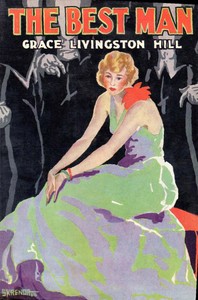
The source record for The best man — Key Ideas to Explore measures this digital text at 72,771 words, 5 hr 17 min estimated reading time, and 22 detected text sections.
The text analysis averages about 18.9 words per sentence, while the detected sections provide another way to judge how the source is divided.
Project Gutenberg metadata also associates the work with “Impostors and imposture -- Fiction,” connecting these edition facts with the source record’s subject description.
Explore this collection
These alternatives are selected using recorded categories and estimated reading time.
About 302 minutes
Utopias Future Societies Other Worlds
69,265 recorded words. 15 minutes difference from this book's estimate.
View Gutenberg source #69788About 293 minutes
Utopias Future Societies Other Worlds
67,315 recorded words. 24 minutes difference from this book's estimate.
View Gutenberg source #70671About 367 minutes
Utopias Future Societies Other Worlds
84,185 recorded words. 50 minutes difference from this book's estimate.
View Gutenberg source #71617Search stored excerpts and compare books → Choose by your preferences →
Choices use stored catalog measurements. Estimates vary with reading speed. A shared category is a catalog label, not a claim that two books have the same argument or literary quality.
Search reads excerpt text stored with this catalog and links to its associated Gutenberg record. The connection is stored in the site database; this tool does not recheck that every excerpt is word-for-word identical to that external record. Excerpt search does not cover every chapter and does not verify historical publication dates.
Catalog snapshot checked: 2026-09-25. Coverage: 100 public books, 100 available source excerpts.
Read the complete public-domain text at its original source.
Read on Project GutenbergThe novel opens not with a wedding but with a summons: Cyril Gordon, a new secret service agent, is given thirty-two minutes to catch a train to New York, instructed to pose as “a respectable gentleman of leisure.” The chief’s curt orders and the rush to pack evening clothes establish a world where identity is a tool and every word carries weight. From this pressurized start, the story moves to a railway carriage where Gordon meets Celia, a woman who believes he is the man who forced her into marriage three months earlier. The gap between what Gordon knows and what Celia assumes drives the narrative forward, creating a sustained tension that the excerpts never fully resolve.
The excerpts repeatedly use natural details to carry emotional and narrative weight. When Gordon and Celia stop by a brook, he gathers forget-me-nots “blue as her eyes”—a phrase that echoes later when she lifts “forget-me-not eyes” to his. The flowers are not mere decoration; they become a private language between two people who cannot speak openly. The brook itself “babbled out” the words “Don’t let anything hinder you! Don’t let anything hinder you!” as if the landscape were urging them forward. This technique—embedding directive whispers in the environment—recurs in the opening scene, where the chief’s “keen blue eyes” and shaggy eyebrows communicate more than his sparse words. Silence, too, is charged: after Gordon’s compliment, Celia’s “eyelashes drooped in a long becoming sweep,” and the pause is broken only by a lark’s song. The natural world does not merely frame the action; it participates in it, offering cues that the characters themselves may not fully grasp.
Small physical objects carry disproportionate significance in these passages. Gordon’s suitcases—which he insists on carrying alone—become a measure of his character. Celia remembers a morning when George Hayne “made her carry two heavy baskets, that his hands might be free to shoot birds.” The contrast is explicit: where the earlier man used her as a beast of burden, Gordon “rejoic[es] in his strength to shield her and bear her burdens.” The suitcases also serve a practical plot function: earlier, Gordon had arranged them for her to sit upon, and later he refuses to let her carry even the umbrella. These repeated gestures build a portrait of care that contradicts Celia’s fear. Yet the excerpts leave open the question of whether this kindness is genuine or part of Gordon’s cover. The narrative withholds his interior motives, so the reader, like Celia, must interpret actions without certainty.
The central irony of the excerpts is that Celia believes she is traveling with the man who “bullied and threatened her for three terrible months and forced her to marry him.” In reality, Gordon is a stranger impersonating that man on orders from his chief. The text never clarifies how the switch occurred or what Gordon knows about the real George Hayne. Celia’s internal conflict—her heart thrilling at Gordon’s words while her mind warns “never, never, must she yield weakly to his smooth overtures”—creates a layered tension. She is not simply a victim; she actively resists her own attraction, suspecting that his pleasantness hides a motive. Gordon, meanwhile, reminds himself that she is “another man’s promised wife,” unaware that she believes he is that man. This mutual misunderstanding, sustained across the excerpts, is the engine of the romance and suspense. The narrative does not resolve it, leaving the reader to wonder when—or if—the truth will surface.
The story’s structure alternates between enclosed, pressurized spaces and expansive natural settings. The opening chapter is confined to an office and a telephone call, with the chief’s “inner office” and the thirty-two-minute deadline creating a claustrophobic urgency. The train carriage is another confined space, where Celia and Gordon are thrown together with no escape. But the excerpts then move to the brookside, where the landscape opens into “purply-green hills” and a willow copse. Here, the characters breathe, speak more freely, and the natural world offers a temporary reprieve from deception. The pattern suggests that truth and connection are possible only outside the structures of authority and obligation. Yet even in the open air, the brook’s babbled command—“Don’t let anything hinder you!”—carries the pressure of the mission forward. The movement between these spaces is not merely scenic; it shapes the rhythm of revelation and concealment.
Readers should attend to what the excerpts leave unsaid. The narrative withholds Gordon’s knowledge of the real George Hayne, the circumstances of the forced marriage, and the outcome of his mission. The gaps are not flaws but invitations: the story’s power lies in watching two people navigate a shared falsehood, each reading the other’s gestures for clues. Pay attention to the objects—suitcases, flowers, an umbrella—and to the silences between words. They carry more truth than any declaration.
On that train, the bride kept looking out at the wildflowers as if they held answers, and I thought of another story where identity shifts like that—who we are versus who we must be. There is a quiet ache in Angel Esquire — Text and Context that reminds me of her hesitation, that same held breath before a choice.
Capture what you thought, learned, and would like to remember.