About 237 minutes
Angel Esquire — Text and Context
Utopias Future Societies Other Worlds
54,384 recorded words. 14 minutes difference from this book's estimate.
View Gutenberg source #72316
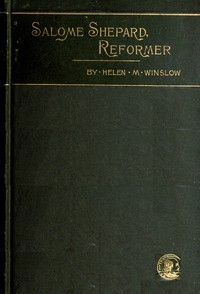
This digital edition of Salome Shepard, reformer — Text and Context is described by source-level measurements including 51,266 words, 3 hr 43 min estimated reading time, and 21 detected text sections.
The text analysis averages about 16.8 words per sentence, while the detected sections provide another way to judge how the source is divided.
Project Gutenberg metadata also associates the work with “Utopias -- Fiction,” connecting these edition facts with the source record’s subject description.
Explore this collection
These alternatives are selected using recorded categories and estimated reading time.
About 237 minutes
Utopias Future Societies Other Worlds
54,384 recorded words. 14 minutes difference from this book's estimate.
View Gutenberg source #72316About 250 minutes
Utopias Future Societies Other Worlds
57,361 recorded words. 27 minutes difference from this book's estimate.
View Gutenberg source #69255About 265 minutes
Utopias Future Societies Other Worlds
60,760 recorded words. 42 minutes difference from this book's estimate.
View Gutenberg source #68767Search stored excerpts and compare books → Choose by your preferences →
Choices use stored catalog measurements. Estimates vary with reading speed. A shared category is a catalog label, not a claim that two books have the same argument or literary quality.
Search reads excerpt text stored with this catalog and links to its associated Gutenberg record. The connection is stored in the site database; this tool does not recheck that every excerpt is word-for-word identical to that external record. Excerpt search does not cover every chapter and does not verify historical publication dates.
Catalog snapshot checked: 2026-09-25. Coverage: 100 public books, 100 available source excerpts.
Read the complete public-domain text at its original source.
Read on Project GutenbergThe novel begins with a strike at the Shawsheen Mills, observed through the eyes of Salome Shepard as she drives her pony-phaeton through the factory precincts on a wet October day. The machinery has stopped, and employees crowd the streets. Winslow contrasts Salome's comfortable morning—spent discussing crochet patterns and society novels—with the underlying tension of the workers' protest. This opening establishes a central tension between Salome's sheltered world and the industrial unrest she must navigate.
The opening chapter uses the strike to introduce Salome's position and perspective. She is the mill owner's daughter, yet she is initially oblivious to the conflict. The narrative notes that the machinery had been 'shrieking and groaning' an hour before, voicing the protest of the 'hands.' Winslow emphasizes the workers' sense of a 'tremendous underlying principle at stake,' but Salome's thoughts remain on her social calls. This gap between her awareness and the workers' reality sets up the reformist arc that follows. Readers should note how the strike is not merely a plot event but a lens through which Salome's character and the novel's social critique are introduced.
In a middle excerpt, Salome shows off a new building she has constructed for her workers. The structure includes a large hall under a dome, with movable seats and a raised platform. She describes it as 'the pride of my heart' and intends it for meetings, lectures, and even dancing. The hall is designed to gradually elevate the workers' tastes—starting with light entertainments and moving toward 'sugar-coated forms of intellectual betterment.' This passage reveals Salome's paternalistic reform philosophy: she believes in lifting workers 'above wanting a low entertainment' by teaching them how 'better people' do things. The building itself becomes a physical symbol of her approach, combining philanthropy with social control.
Throughout the excerpts, other characters react to Salome's plans, providing a range of perspectives. Her aunt, Mrs. Soule, is horrified at the idea of dancing and questions the propriety of Salome's involvement. John Villard, a male companion, offers cautious support, noting that it is only gradually that workers can be brought to a 'higher grade as intelligent young people.' Mr. Burnham sarcastically suggests the hall will be used to plan strikes. These exchanges highlight the social tensions surrounding reform and give readers a sense of the debates within the novel. Salome's responses—sometimes perverse, sometimes confident—reveal her determination and her occasional naivety.
Salome explicitly outlines her method: begin with light, amusing entertainments, then gradually raise the tone. She says, 'If we begin by shooting over their heads, they won't come at all.' This pragmatic approach is central to her character and to the novel's exploration of reform. The excerpts show her awareness of the workers' 'absolute lack of common knowledge,' yet her solution is top-down, offering entertainment and education on her terms. Readers should consider how this strategy reflects broader debates in the 1890s about uplift, class relations, and the role of women in social reform. The novel does not resolve these tensions in the provided excerpts, leaving the effectiveness of Salome's methods open to interpretation.
As you read Salome Shepard, reformer, pay attention to how Winslow balances Salome's idealism with the practical challenges of reform. The excerpts suggest a narrative that is as much about class dynamics and gender roles as about one woman's mission. The strike, the building, and the entertainment strategy each offer a window into the novel's concerns. Consider whether Salome's confidence is justified or if the novel hints at limitations in her approach.
The rain kept up that afternoon while I reread the opening of Salome Shepard, noticing how even her strike scene felt grounded, unhurried, more about quiet resolve than fiery words. That same patient voice surfaced later, almost by accident, when I picked up Father Tom and the Pope — A Closer Reading, and found myself lingering over its gentle ironies the way I had lingered over Salome’s own stubborn hope.
Use these questions to collect your thoughts before moving on.