
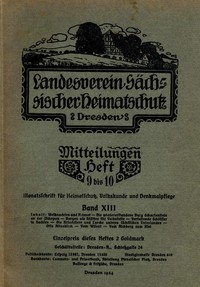
Landesverein Sächsischer Heimatschutz — Mitteilungen Band XIII, Heft 9-10…
This isn't a novel with a single plot. Instead, it's a direct window into the activities of a historical preservation group in Saxony, Germany, during the 1920s. Think of it as a yearbook of their concerns, victories, and ongoing battles. The book is a bound volume of their society's newsletters, so you're reading the actual reports, meeting minutes, and calls to action as they happened.
The Story
The 'story' here is the society's mission. Each article or report is a new chapter in their effort to protect Saxon heritage. One section might detail a successful campaign to get a landmark protected. Another sounds the alarm about a planned road that would cut through a historic landscape. There are detailed studies of traditional farmhouse architecture, lists of endangered plant species in the region's meadows, and even notes on preserving local dialects. The narrative thread is their persistent, sometimes frustrating, work against the tide of modernization. You see them build a network, try to influence local politicians, and rally public support, one old mill or folk costume at a time.
Why You Should Read It
I picked this up expecting a dusty academic journal, but I found something alive. The passion of the writers jumps off the page. These weren't just archivists; they were activists. Reading their precise descriptions of a wooden fence style or their heartfelt pleas to save a grove of trees makes you realize that 'heritage' isn't just about big castles. It's about the everyday landscape that shapes a community's identity. It’s surprisingly easy to connect their worries in the 1920s to today's debates about gentrification, chain stores replacing local businesses, or climate change altering familiar landscapes. The book gives names and specifics to that universal feeling of watching your world change faster than you'd like.
Final Verdict
This is a niche book, but a fascinating one. It's perfect for history buffs, especially those interested in social history, environmental history, or German regional culture. It's also great for anyone involved in local preservation or community activism—you'll find kindred spirits from a century ago. If you love primary sources and the thrill of discovering history raw and unfiltered, you'll enjoy this. It's not a light read, but it’s a rewarding one. You won't get a neat story with an ending, but you will get a powerful, authentic look at a moment when people looked around and decided, firmly, that some things were worth fighting for.
This historical work is free of copyright protections. Distribute this work to help spread literacy.
Charles Martinez
1 year agoHelped me clear up some confusion on the topic.
Donald Moore
1 year agoThis book was worth my time since the plot twists are genuinely surprising. Thanks for sharing this review.
George Ramirez
1 year agoVery interesting perspective.
Lisa Smith
1 year agoThe formatting on this digital edition is flawless.







Michael Garcia
2 years agoIt took me a while to process the complex ideas here, but the objective evaluation of the pros and cons is very refreshing. I'll be recommending this to my students and colleagues alike.