
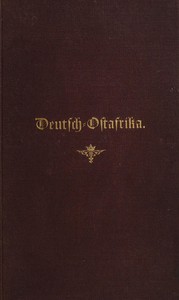
Deutsch-Ostafrika: Geographie und Geschichte der Colonie by Brix Förster
Let's be clear from the start: this isn't a beach read. Deutsch-Ostafrika: Geographie und Geschichte der Colonie is a historical document, a product of its time. Published in the late 19th century, it was written by Brix Förster to explain and justify Germany's colonial project in East Africa (modern-day Tanzania, Rwanda, and Burundi).
The Story
There's no plot in the traditional sense. The book is structured like a formal report. The first part lays out the geography: the coastlines, the rivers, the climate, and the natural resources. It reads like an inventory of assets. The second part is the history, detailing the expeditions, treaties, and military actions that led to German control. It presents colonization as a logical, almost inevitable process of bringing order and development. You won't find character arcs, but you will find the voice of an empire documenting its new possession.
Why You Should Read It
This is where it gets interesting. Reading this book is an exercise in critical thinking. Förster's writing is calm, factual, and assured. But as a modern reader, that's what makes it so powerful. You see how a colonial power viewed land and people as subjects to be studied and managed. The descriptions of landscapes are detailed, yet the African societies living there are often framed as part of the scenery or as obstacles to 'progress.' It doesn't celebrate brutality, but it doesn't question the fundamental right to rule either. That quiet confidence is its most revealing feature. It helps you understand the mindset that built empires.
Final Verdict
This book is a specialist's tool, but a thought-provoking one. It's perfect for history buffs, students of colonialism, or anyone interested in how narratives are built. Don't read it for a balanced history of Tanzania—read it to understand the blueprint the colonizers used. Pair it with books from African perspectives for the full picture. It's dry, it's dated, and it's absolutely a product of its troubling time. But if you want to get inside the head of the colonial era and see how it justified itself on paper, this primary source is a compelling, if often unsettling, window.
You are viewing a work that belongs to the global public domain. Use this text in your own projects freely.
James Anderson
2 years agoLoved it.
Emma Lee
1 year agoCompatible with my e-reader, thanks.
Steven Perez
11 months agoAfter hearing about this author multiple times, it challenges the reader's perspective in an intellectual way. Thanks for sharing this review.
Richard Young
1 year agoHigh quality edition, very readable.