
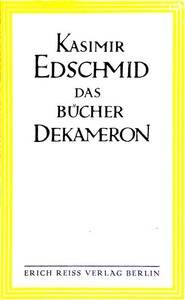
Das Bücher-Dekameron by Kasimir Edschmid
Kasimir Edschmid's Das Bücher-Dekameron is a love letter to stories, cleverly disguised as a novel. Published in 1923, it takes the classic 'framed narrative' idea—think The Canterbury Tales—and gives it a distinctly bookish, early-20th-century German twist.
The Story
A sudden, violent storm strands ten people in a remote castle. They're a mixed bunch: a count, a professor, a painter, a journalist, and other educated types, all united by their love of literature. With the bridges washed out and no way to leave, they face a long, anxious night. To pass the time and calm their nerves, they make a pact. Each person must tell a story. But not just any story. The group agrees that each tale must aim to be 'the most beautiful story in the world,' one that captures the true magic and importance of books. What follows is a series of short stories within the novel, each reflecting the personality and worldview of its teller. The frame narrative watches the group react, debate, and slowly bond over this shared, improvised library of tales.
Why You Should Read It
This book feels like having a brilliant, slightly old-fashioned conversation with a well-read friend. Edschmid doesn't just present a series of stories; he shows us how stories work on people. The real joy is in the frame. You get to see the cynical listener moved to tears, the romantic one challenged, and the group's dynamic shift with each new tale. It’s a quiet, thoughtful look at how fiction helps us understand others and ourselves. The 'inner' stories are varied—some romantic, some tragic, some philosophical—but they all serve that central, beautiful question: what makes a story truly great? It’s a concept any reader can instantly connect with.
Final Verdict
Perfect for readers who enjoy classic European literature, clever structural games, and gentle, character-driven drama. If you like the idea of books about books, or if you've ever fallen for novels like The Shadow of the Wind or The Club Dumas, you'll find a charming, less-sensational ancestor here. It’s not a fast-paced thriller; it’s a warm, witty, and deeply literate novel best savored slowly, perhaps with a good cup of tea on a quiet afternoon. A hidden gem for bibliophiles.
This work has been identified as being free of known copyright restrictions. Thank you for supporting open literature.
Karen Perez
5 months agoI've gone through the entire material twice now, and the way it challenges the status quo is both daring and well-supported. A refreshing and intellectually stimulating read.
Kenneth Wilson
3 months agoThis is one of those stories where it provides a comprehensive overview perfect for everyone. Exceeded all my expectations.
Richard Davis
8 months agoI came across this while browsing and the clarity of the writing makes this accessible. Exceeded all my expectations.
Richard Robinson
1 year agoFrom the very first page, the depth of research presented here is truly commendable. Thanks for sharing this review.



John Perez
10 months agoIt took me a while to process the complex ideas here, but the way it handles controversial points with balance is quite professional. A rare gem in a sea of mediocre content.