About 155 minutes
The bridge of San Luis Rey — Context and Discussion
Historical Psychological Social Fiction
35,600 recorded words. 18 minutes difference from this book's estimate.
View Gutenberg source #69768
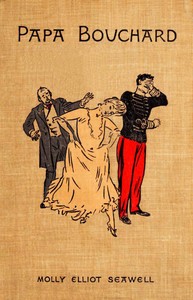
For Papa Bouchard — Key Ideas to Explore, the stored edition analysis reports 39,724 words, 2 hr 53 min estimated reading time, and 10 detected text sections.
The text analysis averages about 18.8 words per sentence, while the detected sections provide another way to judge how the source is divided.
Project Gutenberg metadata also associates the work with “Humorous stories,” connecting these edition facts with the source record’s subject description.
Explore this collection
These alternatives are selected using recorded categories and estimated reading time.
About 155 minutes
Historical Psychological Social Fiction
35,600 recorded words. 18 minutes difference from this book's estimate.
View Gutenberg source #69768About 204 minutes
Historical Psychological Social Fiction
46,842 recorded words. 31 minutes difference from this book's estimate.
View Gutenberg source #71030About 205 minutes
Historical Psychological Social Fiction
46,956 recorded words. 32 minutes difference from this book's estimate.
View Gutenberg source #71229Search stored excerpts and compare books → Choose by your preferences →
Choices use stored catalog measurements. Estimates vary with reading speed. A shared category is a catalog label, not a claim that two books have the same argument or literary quality.
Search reads excerpt text stored with this catalog and links to its associated Gutenberg record. The connection is stored in the site database; this tool does not recheck that every excerpt is word-for-word identical to that external record. Excerpt search does not cover every chapter and does not verify historical publication dates.
Catalog snapshot checked: 2026-09-25. Coverage: 100 public books, 100 available source excerpts.
Read the complete public-domain text at its original source.
Read on Project GutenbergFrom its first pages, Papa Bouchard establishes a rhythm of movement between private and public spaces. The narrative shuttles between the Bouchard apartment on the Rue Clarisse and the garden of a Parisian café, with the parrot Pierrot serving as a kind of mobile conscience. The bird, taught compromising phrases by Léontine Bouchard during her time in the Rue Clarisse, reappears at the most inopportune moments, squawking reminders of past indiscretions. This structural pattern—characters fleeing one location for another, only to be caught out by the parrot—creates a farcical momentum that drives the plot forward.
The parrot Pierrot is not merely a comic prop but a structural device that organizes scenes around its appearances. In the garden sequence, the bird’s shrieks—“Does the old lady know you’re out?” and “Bad boy Bouchard!”—prompt immediate reactions from the characters. De Meneval and Léontine, caught in the arbor, must hide; Papa Bouchard, startled, tries to ignore the bird. The parrot’s calls function like a Greek chorus, commenting on action and forcing characters into defensive postures. Seawell uses the bird to compress time and space: a single screech can collapse the distance between the garden and the domestic sphere, reminding readers that no escape is complete.
Monsieur Bouchard’s attempt to shed his old identity is registered through clothing. He appears in “an extremely youthful suit of light gray, with a flaming necktie, a collar that nearly cut his ears off, and a watch chain that would have answered either for a watch or a dog.” The description emphasizes the gap between intention and effect: the costume is meant to signal vitality but instead marks him as a figure of ridicule. The waiters, “a shrewd and vexatious lot,” immediately read the signs. This attention to sartorial detail recurs throughout the excerpts—Léontine’s white butterfly costume, the paste necklace—suggesting that characters are constantly performing roles that their bodies or circumstances betray.
The café garden functions as a theatrical space where secrets surface. Characters enter and exit like actors: de Meneval and Léontine “flew round the corner of the arbor” to spy; Madame Vernet arrives “in both haste and embarrassment”; Papa Bouchard “entered with an air of affected jauntiness.” The setting allows for simultaneous action—the parrot’s taunts, the waiters’ snickers, the hidden observers—all visible to the reader but not to all characters. This layered staging creates dramatic irony. When Papa Bouchard thinks “one should have a companion,” the arrival of Madame Vernet seems almost scripted. The garden, like the novel itself, is a place where characters believe they can reinvent themselves, only to be exposed by the very elements they try to control.
The excerpts trace a clear spatial pattern: characters move from the domestic interior (the Rue Clarisse apartment) to public or semi-public exteriors (the garden, the street). Each shift carries risk. Papa Bouchard’s decamping from the Rue Clarisse is described as throwing “all his old clothes to the winds, along with his discretion.” The parrot, a creature of the interior, follows him outside, carrying domestic secrets into public. Similarly, Léontine and de Meneval’s flight to the garden is an attempt to escape domestic surveillance, but the garden offers no safety. The novel’s structure depends on these crossings: every movement outward is shadowed by the possibility of being seen, recognized, and judged. The illustrations listed—showing characters buttoning gloves, whispering, fleeing—reinforce this emphasis on gesture and motion across thresholds.
Readers attentive to the novel’s spatial logic will notice how often characters are caught between rooms, doorways, or garden paths. The parrot’s voice, the cut of a coat, the choice of a table—these small details carry the weight of the comedy. Seawell builds her farce not through broad set pieces but through the accumulation of such moments, each one a miniature exposure. The pleasure of the book lies in watching these carefully arranged collisions unfold.
That old Parisian and his parrot made me smile, but oddly, the quiet weight of secrets stayed with me afterwards. It reminded me of how The lost clue — Key Ideas to Explore felt—not the mystery itself, but the way small, everyday deceptions echo longer than any grand reveal, lingering softly in the corners of a room.
Save your reaction, strongest insight, and memorable passage.









