About 204 minutes
The spokesman's secretary — Reading Companion
Historical Psychological Social Fiction
46,842 recorded words. 1 minutes difference from this book's estimate.
View Gutenberg source #71030
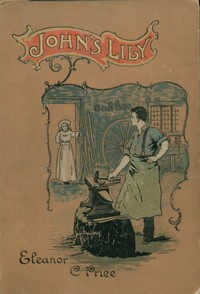
Before opening John's Lily — Edition Insights, the edition data offers a quick orientation: 46,956 words, 3 hr 25 min estimated reading time, and 4 detected text sections.
The text analysis averages about 17.0 words per sentence, while the detected sections provide another way to judge how the source is divided.
Project Gutenberg metadata also associates the work with “Villages -- England -- Fiction,” connecting these edition facts with the source record’s subject description.
Explore this collection
These alternatives are selected using recorded categories and estimated reading time.
About 204 minutes
Historical Psychological Social Fiction
46,842 recorded words. 1 minutes difference from this book's estimate.
View Gutenberg source #71030About 208 minutes
Historical Psychological Social Fiction
47,659 recorded words. 3 minutes difference from this book's estimate.
View Gutenberg source #72811About 231 minutes
Historical Psychological Social Fiction
53,049 recorded words. 26 minutes difference from this book's estimate.
View Gutenberg source #72681Search stored excerpts and compare books → Choose by your preferences →
Choices use stored catalog measurements. Estimates vary with reading speed. A shared category is a catalog label, not a claim that two books have the same argument or literary quality.
Search reads excerpt text stored with this catalog and links to its associated Gutenberg record. The connection is stored in the site database; this tool does not recheck that every excerpt is word-for-word identical to that external record. Excerpt search does not cover every chapter and does not verify historical publication dates.
Catalog snapshot checked: 2026-09-25. Coverage: 100 public books, 100 available source excerpts.
Read the complete public-domain text at its original source.
Read on Project GutenbergThe novel begins not with the foundling Lily but with John Randal, a blacksmith seeing a train for the first time. Price establishes his character through concrete detail: his "brown paper parcel," his "grave expression," and the deliberate contrast between his rustic clothes and the station's uniformed staff. The narrator notes that John's village lies "ten miles at least from the nearest railway station," grounding the story in a specific, insular geography. This opening does not rush to plot; instead, it lets John's stillness and observation define him before any crisis appears.
Price favors plain, declarative sentences that carry emotional weight through understatement. When John watches the train, the prose is almost reportorial: "His eyes were not attracted from it by the hurrying passengers." The absence of exclamation or hyperbole makes his wonder feel earned. Later, Lily's prayer—"O LORD, please take me back to John"—is reported without commentary, the simplicity of the request amplifying its desperation. The narrator refrains from telling the reader how to feel, trusting the words themselves to convey longing.
This restraint extends to dialogue. Characters speak in short, direct phrases: "I'm John's little girl, I'm John's Lily." The repetition of "John's" does the work of ownership and identity. Price avoids ornate speech tags; a character "said" or "asked" without adverbial modification. The effect is a narrative voice that feels both intimate and reserved, allowing the reader to infer emotion from context rather than authorial nudging.
Dialect and register are used sparingly but precisely. The woman who takes Lily speaks in a rougher idiom: "You didn't know what you was saying." The grammatical irregularity signals her social position without caricature. By contrast, the schoolmaster Mr. Bland uses more formal syntax: "He deserves both respect and affection." These linguistic differences are not merely decorative; they map the social landscape of the novel, where a blacksmith, a foundling, and a schoolmaster occupy distinct spheres.
Price also modulates voice to indicate emotional state. When Lily is frightened, her speech becomes fragmented and repetitive: "Please, I'm John's little girl." The plea is stripped of elaboration. In calmer moments, her language is more composed. The shifts are subtle but consistent, demonstrating how Price uses diction to externalize inner turmoil without resorting to psychological exposition.
The novel's descriptive passages are anchored in sensory specifics: the "crooked dip candle," the "wild tempest of wind and rain" at the station, the "red roses and tall white lilies" in John's garden. These details do more than set a scene; they carry thematic weight. The lilies, for instance, are both a literal plant and a recurring emblem connected to Lily herself. Price does not italicize their symbolism; she lets the image recur naturally.
Setting is often rendered through the characters' perceptions. John's village is described not in abstract terms but through what he knows: "his cottage in the village street, his blacksmith's forge, his garden." The list form mimics the way a person catalogues what matters to them. When the narrative shifts to the waiting-room, the description is equally functional: "the dingy waiting-room," "the wooden building." Price's eye for the mundane—the shawls wrapped around Lily, the bench corner—creates a world that feels tangible and unglamorous.
The excerpts reveal a careful control of narrative timing. The opening chapter delays the introduction of Lily, focusing instead on John's journey and his unfamiliarity with the city. This structural choice establishes John as the emotional center before the foundling appears. Later, the revelation of Lily's identity in the waiting-room is staged as a gradual recognition: the bundle of shawls, the scrambling movement, the spoken name. Price withholds the child's face until after her plea, making the moment of identification more dramatic.
Chapter titles such as "Storm and Sunlight" and "In the Dark" hint at a patterned alternation between crisis and respite. The excerpts show a preference for scenes that build slowly to a turning point—the fair, the train station—rather than abrupt reversals. Price also uses minor characters like the Blands to deliver information obliquely; their conversation about John and Lily advances the plot while remaining naturalistic. The result is a narrative that feels unhurried but never slack.
Readers attentive to Price's craft will notice how often she lets a gesture or a piece of furniture do the work of explanation. The brown paper parcel, the crooked candle, the shawls—these objects accumulate meaning without being forced into symbolism. The novel rewards a slow reading that attends to what is said and what is left unsaid, particularly in dialogue and description. Price's restraint is not coldness; it is a deliberate choice to make the reader an active participant in discovering the story's emotional core.
There’s a moment in John's Lily where the railway station hums louder than any spoken word, and I kept thinking how a whisper can carry more than a shout. It reminded me of the quiet pull in Early autumn — A Reader’s Guide, where a season turns gently and lingers like a half-remembered touch. Some stories settle that way, softly, long after the last page.
Use these questions to collect your thoughts before moving on.









