About 205 minutes
John's Lily — Edition Insights
Historical Psychological Social Fiction
46,956 recorded words. 1 minutes difference from this book's estimate.
View Gutenberg source #71229
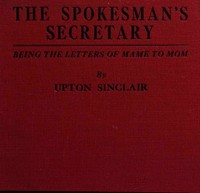
This digital edition of The spokesman's secretary — Reading Companion is described by source-level measurements including 46,842 words, 3 hr 24 min estimated reading time, and 23 detected text sections.
The text analysis averages about 25.1 words per sentence, while the detected sections provide another way to judge how the source is divided.
Project Gutenberg metadata also associates the work with “Epistolary fiction,” connecting these edition facts with the source record’s subject description.
Explore this collection
These alternatives are selected using recorded categories and estimated reading time.
About 205 minutes
Historical Psychological Social Fiction
46,956 recorded words. 1 minutes difference from this book's estimate.
View Gutenberg source #71229About 208 minutes
Historical Psychological Social Fiction
47,659 recorded words. 4 minutes difference from this book's estimate.
View Gutenberg source #72811About 231 minutes
Historical Psychological Social Fiction
53,049 recorded words. 27 minutes difference from this book's estimate.
View Gutenberg source #72681Search stored excerpts and compare books → Choose by your preferences →
Choices use stored catalog measurements. Estimates vary with reading speed. A shared category is a catalog label, not a claim that two books have the same argument or literary quality.
Search reads excerpt text stored with this catalog and links to its associated Gutenberg record. The connection is stored in the site database; this tool does not recheck that every excerpt is word-for-word identical to that external record. Excerpt search does not cover every chapter and does not verify historical publication dates.
Catalog snapshot checked: 2026-09-25. Coverage: 100 public books, 100 available source excerpts.
Read the complete public-domain text at its original source.
Read on Project GutenbergMame Riggs, a manicurist, lands a job as secretary to a political spokesman after a chance encounter in her shop. Her letters to “Mom” open with a Cinderella-like flourish: “Your Mame has been cast for little Cinderella in the big political show.” The voice is immediate, colloquial, and self-aware—Mame reads people by their hands and their silences. When her future employer hesitates to confide, she prompts him: “Is it some mystery of the female soul you can’t make out?” The novel’s epistolary form lets Sinclair build character through rhythm and idiom rather than exposition.
The opening letter establishes Mame’s world through sensory detail and social observation. She sizes up a customer by his cuffs, hands, and the quality of his silence: “everything quiet and exactly right.” Her job, she explains, is “the principal part” listening to gentlemen’s troubles. The manicure table becomes a confessional where class boundaries blur. Mame’s vernacular—phrases like “a top-notcher I can see” and “you could of knocked me over with an orange stick”—is not merely decorative; it signals her sharp intelligence and her position on the margins of the power she observes. Sinclair uses the setting to dramatize how Mame reads status and emotion through small physical cues, a skill she will carry into the political sphere.
In a later excerpt, Mame’s landlady announces a visitor, and the scene shifts abruptly from comedy to threat. Mrs. Edgerton, the wife of Mame’s employer, appears at her door: “Are you the woman that is going with my husband!” Mame’s internal monologue mixes fear and theatrical awareness: “it is exactly like the big scene in a play you know how it is Mom only you really don’t because it is another thing altogether when it is real.” The moment pivots when Mrs. Edgerton bursts into tears, and Mame’s sympathy overrides her defensiveness. The exchange reveals Sinclair’s interest in emotional complexity—the wife is both antagonist and sufferer, and Mame’s response is pragmatic, not sentimental. The scene also underscores the novel’s epistolary intimacy: Mame narrates danger with a blend of bravado and vulnerability.
Mame’s language is the novel’s central device. She writes in a demotic American English that carries class markers and a wry intelligence. Her metaphors are drawn from her trade—“you could of knocked me over with an orange stick”—and her observations are blunt: “Florabelle makes up her complexion in a dark room and ain’t got the sense to look it over by daylight.” This voice does more than characterize; it implicitly critiques the genteel world she enters. When she describes a political figure’s hands as “not soft nor flabby like many of the big fellows,” she measures power by physical labor. The letters allow Sinclair to embed social commentary in Mame’s offhand judgments, making the political personal without editorializing.
The novel is composed of eighteen letters, each with a chapter heading that teases the action: “In Which I Join the Higher-Ups,” “In Which I Peek Into a Palace,” “In Which I Lose My Lover.” These headings function as a table of contents and a running commentary, giving the reader a roadmap of Mame’s trajectory. The epistolary form creates a sense of immediacy and confidentiality—the reader is cast as “Mom,” the trusted confidante. Sinclair exploits this intimacy to build suspense: Mame’s asides (“gee Mom it sure makes your hair rise up”) invite the reader into her fear and excitement. The letters also allow for gaps in time and knowledge, mirroring Mame’s own partial understanding of the political machinations around her.
Reading The Spokesman’s Secretary means listening to Mame’s voice—its rhythms, its slang, its sudden shifts from comedy to tension. The letters reward attention to what she notices and what she leaves unsaid. Because the excerpts are incomplete, the reader should watch how Mame’s perspective evolves across the full sequence of letters, particularly in her dealings with the Edgertons and the political world. The novel’s power lies not in plot twists but in the steady, idiosyncratic presence of its narrator.
Reading Mame’s letters, I remembered typing my grandmother’s grocery lists, pretending they were dispatches. Her small rebellions against the polished world felt like my own shy awkwardness at office parties. That quiet tension between ordinary life and grander schemes echoed strangely in Emmanuel Burden, merchant, of Thames St., in the city of London, exporter of hardware — Reading Companion, where a tradesman’s steady heart meets political tides. Both books whisper: we’re all just keeping our balance.
Answer a few questions and save a private reflection on this device.









