About 318 minutes
The book of Evelyn — Themes and Context
Historical Psychological Social Fiction
72,970 recorded words. 0 minutes difference from this book's estimate.
View Gutenberg source #68941
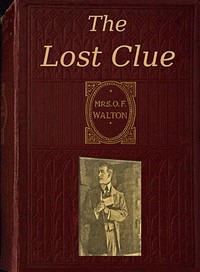
The catalog record for The lost clue — Key Ideas to Explore provides practical reading context through 72,943 words, 5 hr 18 min estimated reading time, and 7 detected text sections.
The text analysis averages about 16.9 words per sentence, while the detected sections provide another way to judge how the source is divided.
Project Gutenberg metadata also associates the work with “Christian life -- Fiction,” connecting these edition facts with the source record’s subject description.
Explore this collection
These alternatives are selected using recorded categories and estimated reading time.
About 318 minutes
Historical Psychological Social Fiction
72,970 recorded words. 0 minutes difference from this book's estimate.
View Gutenberg source #68941About 318 minutes
Historical Psychological Social Fiction
73,016 recorded words. 0 minutes difference from this book's estimate.
View Gutenberg source #73198About 319 minutes
Historical Psychological Social Fiction
73,206 recorded words. 1 minutes difference from this book's estimate.
View Gutenberg source #70416Search stored excerpts and compare books → Choose by your preferences →
Choices use stored catalog measurements. Estimates vary with reading speed. A shared category is a catalog label, not a claim that two books have the same argument or literary quality.
Search reads excerpt text stored with this catalog and links to its associated Gutenberg record. The connection is stored in the site database; this tool does not recheck that every excerpt is word-for-word identical to that external record. Excerpt search does not cover every chapter and does not verify historical publication dates.
Catalog snapshot checked: 2026-09-25. Coverage: 100 public books, 100 available source excerpts.
Read the complete public-domain text at its original source.
Read on Project GutenbergMrs. O. F. Walton opens The Lost Clue not with a country house or a foggy London street, but with the precise mechanics of New Street Station, Birmingham. The London express is described as a 'great monster of the deep, flying through air instead of water,' a simile that grounds the novel’s mystery in the industrial, modern world of 1910. The station’s six platforms, multiple booking offices, and the 'busy stream of human life' crossing the bridge establish a setting where strangers pass and secrets can be lost or found.
Walton’s attention to physical detail extends to the characters: a gentleman alights with a 'long kit-bag,' and later a missing finger joint becomes a crucial identifying mark. The narrative voice is direct, favoring concrete observation over abstract reflection.
The opening chapter uses Birmingham’s New Street Station as more than a backdrop. Walton describes the 'bustle, hurry, and rush' with a cataloguer’s precision: two railway lines, six platforms, and the 'great bridge which spans the station from side to side.' The London express is personified as a monster that 'puffed, snorted, panted' but never stopped until it 'came running triumphantly into Birmingham.' This mechanical energy contrasts with the quiet country places the stranger has left behind, hinting at a tension between rural and urban that runs through the novel.
Walton’s choice to begin in a railway station—a place of arrivals, departures, and chance encounters—is deliberate. It introduces a world where identity can be obscured and where a lost clue might be picked up by the wrong hands. The porters’ rush toward the first-class carriages for 'tips' adds a note of economic realism, grounding the mystery in everyday transactions.
Walton uses dialect sparingly but effectively. Mother Hotchkiss, a dying woman, misremembers the name 'Fortescue' as 'Forty Screws,' linking it to a box her husband kept screws in. This verbal slip is not mere color; it becomes a clue that Marjorie must interpret. The old woman’s speech is marked by contractions and colloquialisms: 'I never can remember names, only I thought of the screws in a box my old man used to keep ’em in.'
Marjorie’s response is more formal, even theological: 'If we confess our sins, He is faithful and just to forgive us our sins.' The contrast in diction—between Mother Hotchkiss’s homely associations and Marjorie’s scriptural precision—highlights the social and educational gap between the characters. Walton does not sentimentalize the dialect; it serves as a marker of class and a vehicle for the mystery.
The discovery of the tin box is rendered with careful physical detail. Marjorie finds it 'tightly jammed into the wall, and well out of sight' in a second cupboard. The box is 'tied up tightly with string, and the string was sealed in several places.' Walton emphasizes the tactile: Marjorie breaks the seals, unfastens the string, and takes off the lid. Inside is a sheet of foolscap 'closely covered with writing.'
The contents are revealed only partially: the letter begins 'My dear Ken' and ends 'Your loving Father, Joseph Fortescue.' Marjorie recognizes the handwriting from cheques sent to her mother. Walton withholds the full text, keeping the reader focused on Marjorie’s agitation—her teeth chatter, she trembles. The box becomes a physical object that carries emotional weight, and its secrecy drives the plot forward. The promise to deliver it personally adds a moral dimension to the mystery.
Adolf Thiede’s frontispiece depicts the moment when a character sees that 'the little finger of the Earl’s right hand had lost its last joint.' This visual detail—a missing finger joint—is the kind of concrete, observable clue that Walton favors. Unlike atmospheric or psychological hints, this is a physical marker that could identify a person or connect events.
The list of illustrations includes three captions: the missing finger, a man turning to see Watson behind him, and a woman gazing at a picture. These suggest that Walton and Thiede worked together to highlight moments of recognition and revelation. The illustrations are not decorative; they anchor the narrative in visible, tangible evidence. In a novel where a lost clue is literally a sealed letter, the visual emphasis on hands, faces, and objects reinforces the author’s method of building mystery through what can be seen and touched.
Walton’s prose rewards attention to small things: a misremembered name, a sealed box, a missing finger joint. Readers who track these physical details will find the mystery unfolding through objects and gestures rather than through abstract deduction. The novel’s Christian moral framework is present but not heavy-handed, and the Birmingham setting offers a refreshing change from the usual country-house or London fog. Approach The Lost Clue as a puzzle built from concrete evidence, and let the characters’ actions—not their words—guide you.
I found myself thinking of that Birmingham platform in Walton’s novel, the tin box waiting unopened, when I picked up A private chivalry — Reading Notes. There’s the same patient hush around secrets, the sense that certain details—a word, a clasp—carry more weight than they first admit. I suppose both books remind me of holding something fragile, almost by accident.
Use these questions to collect your thoughts before moving on.









