About 155 minutes
The bridge of San Luis Rey — Context and Discussion
Historical Psychological Social Fiction
35,600 recorded words. 75 minutes difference from this book's estimate.
View Gutenberg source #69768
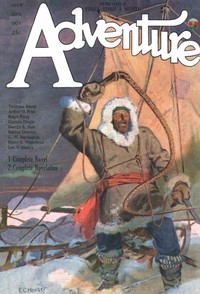
Marston and me — Background and Themes can be approached with a clearer sense of reading commitment from its source measurements: 18,325 words, 1 hr 20 min estimated reading time, and 2 detected text sections.
The text analysis averages about 19.1 words per sentence, while the detected sections provide another way to judge how the source is divided.
Project Gutenberg metadata also associates the work with “Interpersonal relations -- Fiction,” connecting these edition facts with the source record’s subject description.
Explore this collection
These alternatives are selected using recorded categories and estimated reading time.
About 155 minutes
Historical Psychological Social Fiction
35,600 recorded words. 75 minutes difference from this book's estimate.
View Gutenberg source #69768About 173 minutes
Historical Psychological Social Fiction
39,724 recorded words. 93 minutes difference from this book's estimate.
View Gutenberg source #70469About 204 minutes
Historical Psychological Social Fiction
46,842 recorded words. 124 minutes difference from this book's estimate.
View Gutenberg source #71030Search stored excerpts and compare books → Choose by your preferences →
Choices use stored catalog measurements. Estimates vary with reading speed. A shared category is a catalog label, not a claim that two books have the same argument or literary quality.
Search reads excerpt text stored with this catalog and links to its associated Gutenberg record. The connection is stored in the site database; this tool does not recheck that every excerpt is word-for-word identical to that external record. Excerpt search does not cover every chapter and does not verify historical publication dates.
Catalog snapshot checked: 2026-09-25. Coverage: 100 public books, 100 available source excerpts.
Read the complete public-domain text at its original source.
Read on Project GutenbergThe narrator, a border patrol pilot known as 'Slim,' opens with a complaint about monotony: 'Life on the border had hit a dry spell.' The story quickly pivots from boredom to a St. Patrick's Day bender with Lieutenant George Groody, then to a harrowing flight back to McMullen airfield. The structure hinges on a single morning-after hangover that leads to a crash investigation, revealing filed control cables. The narrative moves from the airdome to a riverside search, using the Rio Grande as a recurring boundary between routine and danger.
The opening pages establish a deliberate contrast between tedium and crisis. Slim describes the border patrol as 'slowly dying of dry-rot,' with gallops along the Rio Grande yielding nothing. This lull is broken by a holiday drinking session with Groody, whose annual St. Patrick's celebration in Mexico involves 'six gin fizzes set up in a row.' The hangover becomes a structural pivot: Slim wakes in a Laredo alley, then must fly back to McMullen while 'temporarily a prohibitionist.' The flight itself is uneventful, but the landing sets up the sabotage plot. The author uses the hangover as a narrative device—it explains Slim's delayed perception and frames the subsequent crash as a rude awakening from both literal and figurative stupor.
When Slim examines Fernald's crashed plane, the description is methodical. He notes the control wires 'hung loosely' and breaks through the fuselage to find 'the cables had been filed inside.' The detail is precise: the filing was 'not completely through, but nearly,' designed to fail under speed and propeller blast. Slim reconstructs the perpetrator's likely intent—that the cables would give way mid-flight, not on the field. This forensic moment grounds the story in mechanical reality. The narrator's voice shifts from sardonic to clinical, and the evidence becomes the story's center of gravity. The scene also introduces Marston, the sergeant whose 'sullen, strained face' and physical sickness mark him as suspect. Slim's conclusion—'I was looking at as low and rotten a murderer'—is stated without proof, leaving the reader to weigh the circumstantial case.
The narrative repeatedly crosses between the airdome and the river. After the crash, Slim orders a boat to search for Fernald's wreckage, moving from the 'small, flat and hard to land on' field to the Rio Grande. The river is a persistent backdrop: earlier, the patrolmen 'galloped up and down the frisky Rio Grande'; now it becomes a site of recovery and confrontation. The shift from air to water mirrors the story's thematic movement from routine patrol to crisis management. Slim's command to the crowd—'Get back on the field and stay there'—shows his authority, while the boat journey with Marston isolates the two men. The river, like the border, is a liminal space where rules bend. The author uses these transitions to heighten tension, alternating between open sky and confined boat.
Slim's first-person narration is colloquial and self-deprecating, full of folksy aphorisms: 'it is darkest just before you switch on the electric lights,' 'it's a long worm which has no turning.' He admits to occasional 'sensible ideas' but also to drinking, hangovers, and a temper. This voice colors every observation. When he calls Marston a 'broken man' and then sees him 'straighten like a shot,' the reader must decide whether Slim is a reliable judge of character. The excerpts offer no third-person confirmation; the story is filtered entirely through Slim's perceptions. His certainty about Marston's guilt—'utterly convinced'—may be prejudice or insight. The author leaves this ambiguity unresolved in the available text, making the narrator's credibility a central question for the reader.
Readers should attend to how the narrator's hangover and dry humor shape the investigation. The sabotage evidence is concrete, but the case against Marston rests on Slim's reading of his face and silence. The story moves quickly between settings—alley, airdome, river—and each shift changes the power dynamics. Whether Marston is guilty or a scapegoat remains open; the excerpts do not reveal the outcome. The book rewards attention to mechanical detail and the narrator's self-awareness.
Reading about Marston’s bleary morning after, I remembered a long drive home through fog, and how that quiet dread felt familiar. Then I thought of Nobody's fault — Story, Setting & Ideas, where a similar weight hangs over small, ordinary choices. Both books leave me sitting with the aftermath, not the action itself, which feels oddly comforting.
Capture what you thought, learned, and would like to remember.









