About 346 minutes
The Crucible — Reading Notes
Historical Psychological Social Fiction
79,451 recorded words. 8 minutes difference from this book's estimate.
View Gutenberg source #68775
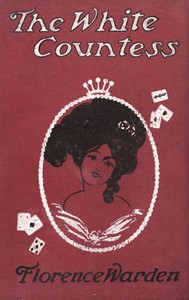
This digital edition of The white countess — Reading Notes is described by source-level measurements including 81,202 words, 5 hr 54 min estimated reading time, and 8 detected text sections.
The text analysis averages about 18.8 words per sentence, while the detected sections provide another way to judge how the source is divided.
Project Gutenberg metadata also associates the work with “London (England) -- Fiction,” connecting these edition facts with the source record’s subject description.
Explore this collection
These alternatives are selected using recorded categories and estimated reading time.
About 346 minutes
Historical Psychological Social Fiction
79,451 recorded words. 8 minutes difference from this book's estimate.
View Gutenberg source #68775About 341 minutes
Historical Psychological Social Fiction
78,355 recorded words. 13 minutes difference from this book's estimate.
View Gutenberg source #69388About 337 minutes
Historical Psychological Social Fiction
77,430 recorded words. 17 minutes difference from this book's estimate.
View Gutenberg source #70877Search stored excerpts and compare books → Choose by your preferences →
Choices use stored catalog measurements. Estimates vary with reading speed. A shared category is a catalog label, not a claim that two books have the same argument or literary quality.
Search reads excerpt text stored with this catalog and links to its associated Gutenberg record. The connection is stored in the site database; this tool does not recheck that every excerpt is word-for-word identical to that external record. Excerpt search does not cover every chapter and does not verify historical publication dates.
Catalog snapshot checked: 2026-09-25. Coverage: 100 public books, 100 available source excerpts.
Read the complete public-domain text at its original source.
Read on Project GutenbergThe novel begins not with a crime but with a wife's teasing question—'Oh, Gerard, what a long face!'—and the husband's immediate, instinctive softening at her voice. Within a few paragraphs, the domestic banter gives way to a hushed confession: Gerard is accused of forging three cheques for Sir Richmond Hornthwaite. The setting, a 'jerry-built mansion' in West Kensington where neighbours overhear each other through the chimney, establishes a world of thin walls and fragile respectability. The opening chapters thus plant two mysteries: the forgery itself and the question of how a bank clerk's wife will respond when her husband's guilt seems probable.
The early excerpts show Audrey Angmering as a wife who reads her husband's face before he speaks. When Gerard turns on her 'eyes in which agony revealed itself unmistakably,' she does not demand an explanation; she clings, comforts, and waits. The narrative voice notes her 'loving woman's instinctive knowledge' that the worst is coming. This pattern of silent understanding and deferred revelation shapes the first third of the book. Readers should watch how Audrey's trust is challenged not only by the accusation but by what Gerard chooses not to say. The text gives no interior monologue from Gerard; his emotions are visible only through his wife's perception.
Audrey's investigation of the house she occupies—a property tied to a mysterious 'duchess'—introduces a second layer of intrigue. She discovers a billiard-room with a door leading straight to the road, used for gambling 'probably night after night.' The housekeeper's refusal to surrender the key, followed by her grey-faced capitulation when Audrey threatens police, suggests a conspiracy that reaches beyond the servants. The room's evidence—'stray coins, soiled and torn cards, overturned chairs, a broken candlestick'—is described with forensic precision. Notably, Audrey's discovery forces her to write a letter retracting her earlier assurance to Lord Clanfield that his sons were not admitted. The locked room thus becomes a hinge between the domestic forgery plot and a wider social scandal.
Midway through the excerpts, Audrey's suspicions coalesce around the duchess who owns the house. The narrative poses a series of pointed questions: 'Was she a lady of rank? Or was she only the bearer of a fancy title? Was she, in short, the proprietor of a gaming-house?' These questions remain unanswered in the provided text, leaving the duchess's identity and role ambiguous. The reader is positioned alongside Audrey, who must decide whether the duchess is a titled aristocrat or a front for illegal gambling. The text's refusal to clarify early on is a deliberate structural choice; it forces the reader to weigh evidence—the locked room, the housekeeper's fear, the nocturnal voices—without authorial confirmation.
Warden's prose is notable for its reliance on indirect revelation. Dialogue carries much of the plot, but the narrator often withholds characters' inner thoughts, especially Gerard's. The setting—a 'modest little flat' in West Kensington—is described with ironic specificity: the hundred-pound rent, the jerry-built walls, the skylights that transmit the click of billiard balls. These details are not mere atmosphere; they are functional. The thin walls explain how Audrey overhears the gamblers; the skylights prove the billiard-table was unused. Readers attuned to such environmental clues will find that the house itself becomes a silent witness. The novel's title, 'The White Countess,' is never explained in the excerpts, adding a further enigma that may connect to the duchess or to a character yet unseen.
Because the excerpts end before the forgery accusation is resolved or the duchess's identity revealed, a first reading should attend to how Warden parcels out information through objects and gestures rather than exposition. The locked room, the broken candlestick, the housekeeper's stammer—each detail carries weight. Readers may also note that the narrative voice, though third-person, stays close to Audrey's perspective, making her discoveries the reader's own. The novel rewards patience with its gradual unspooling of secrets, and the early chapters establish a pattern of domestic trust under siege that likely persists throughout.
Reading The White Countess, I kept lingering on Audrey’s quiet desperation within those locked rooms, the weight of a secret marriage pressing on every choice. It reminded me of another story’s soft ache—how a chaperon’s duty can chafe against a heart’s own wishes. That tension between obligation and longing lingers here, as in The official chaperon — Themes and Context, a familiar, tender ache.
Capture what you thought, learned, and would like to remember.









