About 341 minutes
The official chaperon — Themes and Context
Historical Psychological Social Fiction
78,355 recorded words. 4 minutes difference from this book's estimate.
View Gutenberg source #69388
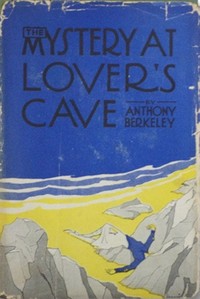
For The mystery at lovers' cave — Background and Themes, the stored edition analysis reports 77,430 words, 5 hr 37 min estimated reading time, and 29 detected text sections.
The text analysis averages about 13.7 words per sentence, while the detected sections provide another way to judge how the source is divided.
Project Gutenberg metadata also associates the work with “Detective and mystery stories,” connecting these edition facts with the source record’s subject description.
Explore this collection
These alternatives are selected using recorded categories and estimated reading time.
About 341 minutes
Historical Psychological Social Fiction
78,355 recorded words. 4 minutes difference from this book's estimate.
View Gutenberg source #69388About 346 minutes
Historical Psychological Social Fiction
79,451 recorded words. 9 minutes difference from this book's estimate.
View Gutenberg source #68775About 325 minutes
Historical Psychological Social Fiction
74,612 recorded words. 12 minutes difference from this book's estimate.
View Gutenberg source #70740Search stored excerpts and compare books → Choose by your preferences →
Choices use stored catalog measurements. Estimates vary with reading speed. A shared category is a catalog label, not a claim that two books have the same argument or literary quality.
Search reads excerpt text stored with this catalog and links to its associated Gutenberg record. The connection is stored in the site database; this tool does not recheck that every excerpt is word-for-word identical to that external record. Excerpt search does not cover every chapter and does not verify historical publication dates.
Catalog snapshot checked: 2026-09-25. Coverage: 100 public books, 100 available source excerpts.
Read the complete public-domain text at its original source.
Read on Project GutenbergThe opening chapter of The Mystery at Lovers’ Cave introduces Roger Sheringham not through a crime scene but at his breakfast table, bickering with his cousin Anthony over train times and newspaper articles. The dialogue is quick, sardonic, and self-aware: Roger complains that Anthony’s presence destroys “the chief and abiding joy of bachelorhood,” while Anthony deflects by reading aloud a headline about shingled heads and hearts. This banter establishes a tone of intellectual sparring that persists throughout the excerpts.
When the pair later explore the cave, the investigation becomes a study in material detail. Roger methodically catalogues cigarette-ends, chocolate boxes, sandwich wrappings, and a copy of London Opinion—each item dated and assessed for dampness. The cave itself is described as a “natural couch” with a “large, flat boulder” as a table, grounding the mystery in a specific, tangible space.
The excerpts devote considerable space to the cousins’ verbal jousting before any crime is mentioned. Roger’s complaint about Anthony’s failure to check the train timetable is a comic set piece, but it also reveals their dynamic: Roger is the self-styled intellectual, Anthony the more practical (if easily distracted) foil. When Anthony finally notices Roger’s crime article in the Daily Courier, he misdirects to a piece on “Do Shingled Heads Mean Shingled Hearts?”—a joke that underscores the novel’s interest in misreading and interpretation.
This early scene establishes that Roger writes about crime for a living, yet his methods are far from academic. He describes writing “down to the standard of intelligence of the ordinary Courier reader,” a remark that suggests both arrogance and a pragmatic understanding of audience. The banter is not mere filler; it primes the reader for a detective who treats investigation as a performance, complete with theatrical asides and pointed observations.
When Roger and Anthony finally enter Lovers’ Cave, the narrative shifts from dialogue to forensic inventory. Roger’s torch reveals “cigarette-ends, matches, candle-ends all over the place,” along with “half-a-dozen empty chocolate boxes,” “paper bags, sandwich wrappings, half a bun.” He picks up cigarette-stubs and distinguishes “four gaspers and two Turkish,” noting the latter have “pink at the ends.” This attention to brand and condition—damp, mildewed—suggests a timeline: the cave has not been used for “over a fortnight.”
The discovery of a London Opinion dated the previous Saturday is the turning point. Roger’s reaction—“Good for you, Anthony!”—and his exclamation that “Colin was not telling the truth after all!” show how a single object can unravel an alibi. The cave is not just a setting but a repository of physical traces, each item a potential clue. The narrative treats these objects with the same precision that earlier characterized the breakfast dialogue, linking verbal wit to material evidence.
In Chapter XIV, Roger and Anthony continue their investigation on a seaside rock, Roger “dabbling his bare foot” in the water while arguing that “Colin may have been telling the truth, after all.” This scene mirrors the breakfast-table dynamic: Roger plays devil’s advocate, testing hypotheses through conversation. The setting—a rock “which remained unsubmerged”—is both literal and metaphorical, a precarious platform for reasoning.
Roger’s insistence on privacy for “airing his theories” highlights his need for an audience, even a reluctant one. Anthony, described as “the idiot friend,” serves as a sounding board, his impatience to visit a “certain small grassy ledge” providing comic contrast. The chapter title, “Roger Is Argumentative,” is apt: his method is not solitary deduction but collaborative debate, where each objection sharpens the argument. This approach aligns with the novel’s emphasis on dialogue over action, and on the social performance of detection.
The excerpts offer a concentrated view of Anthony Berkeley’s style: witty, detail-oriented, and skeptical of easy conclusions. Readers should attend to the interplay between what characters say and what objects reveal—the cave’s detritus speaks louder than any confession. The novel’s structure, with chapter titles like “Our Special Correspondent” and “Inspector Moresby Is Reluctant,” signals a playful approach to genre conventions. Approach the text as a puzzle in which every cigarette stub and magazine date matters, and where the detective’s own vanity is part of the evidence.
I finished that old 1927 mystery, the one where Roger and Anthony poke around that seaside cave, and I kept thinking how the smallest things—a crushed cigarette stub, a stray magazine—ended up mattering most. It reminded me of something quieter I found later, Re-creations — Inside the Classic, which lingers on the same kind of noticing. Odd how a detail stays with you long after the plot fades.
Build a private reading journal entry for this title.









