About 461 minutes
A private chivalry — Reading Notes
Historical Psychological Social Fiction
105,998 recorded words. 10 minutes difference from this book's estimate.
View Gutenberg source #72849
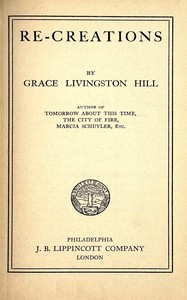
For Re-creations — Inside the Classic, the stored edition analysis reports 108,221 words, 7 hr 51 min estimated reading time, and 39 detected text sections.
The text analysis averages about 17.6 words per sentence, while the detected sections provide another way to judge how the source is divided.
Project Gutenberg metadata also associates the work with “Young women -- Fiction,” connecting these edition facts with the source record’s subject description.
Explore this collection
These alternatives are selected using recorded categories and estimated reading time.
About 461 minutes
Historical Psychological Social Fiction
105,998 recorded words. 10 minutes difference from this book's estimate.
View Gutenberg source #72849About 454 minutes
Historical Psychological Social Fiction
104,299 recorded words. 17 minutes difference from this book's estimate.
View Gutenberg source #72406About 453 minutes
Historical Psychological Social Fiction
103,974 recorded words. 18 minutes difference from this book's estimate.
View Gutenberg source #69785Search stored excerpts and compare books → Choose by your preferences →
Choices use stored catalog measurements. Estimates vary with reading speed. A shared category is a catalog label, not a claim that two books have the same argument or literary quality.
Search reads excerpt text stored with this catalog and links to its associated Gutenberg record. The connection is stored in the site database; this tool does not recheck that every excerpt is word-for-word identical to that external record. Excerpt search does not cover every chapter and does not verify historical publication dates.
Catalog snapshot checked: 2026-09-25. Coverage: 100 public books, 100 available source excerpts.
Read the complete public-domain text at its original source.
Read on Project GutenbergThe novel opens with Cornelia Copley pressing her face against a train window, leaving college mid-year. Her departure is marked by a flurry of shouted farewells from friends, but the narrator quickly turns inward: Cornelia watches the college buildings fade, her tears blurring the familiar landscape. The scene establishes a pattern of external cheer masking internal distress—a tension that recurs throughout the excerpts.
Grace Livingston Hill builds the story around small, concrete actions: a sister's worry over a torn dress, the precise adjustment of an oven flame, the transformation of a pink organdie with lace and velvet bows. These details anchor the narrative in domestic craftsmanship rather than dramatic plot turns.
The opening chapter establishes Cornelia's abrupt transition from college to family duty. Her father's letter has recalled her, and she reads it repeatedly, trying to understand why he cannot see the importance of her education. The narrator notes her mouth taking on “hard little alien lines” and her eyes turning “almost steely.” Yet the scene is not one of rebellion; it is a quiet collapse, described as a bit of wax candle melting under heat.
This tension between personal ambition and family obligation sets the novel's central conflict. Hill does not resolve it quickly. Instead, she shows Cornelia turning her attention to practical tasks: planning meals, mending clothes, organizing a household. The excerpts suggest that the story will explore how Cornelia channels her thwarted aspirations into domestic creativity.
A later excerpt shows Cornelia preparing for a party. She has transformed her sister Louise's old blue challis into a pink organdie dress with lace and black velvet bows, and has added rosettes to worn pumps. Louise's delighted cry—“She's made over her beautiful pink organdie with the lace on it for me!”—reveals the emotional weight of these small acts. Harry, the brother, calls Cornelia “the darlingest sister in the world.”
Hill lingers on the details of this transformation: the mended tear, the washed collar, the white silk stockings. These are not mere props; they are the substance of the narrative. Cornelia's resourcefulness becomes a form of love, and her ability to create beauty from scarcity is presented as a skill as valuable as any college degree.
Throughout the excerpts, clothing carries significant meaning. Louise confesses she planned to stay in the kitchen to hide her old blue challis, worried that a guest would judge the family by her appearance. Cornelia reassures her by providing a suitable dress. The scene underscores how material circumstances shape social confidence and family pride.
Hill uses clothing to reveal character and relationship dynamics. Cornelia's own choice—a white rajah silk with burnt-orange trimmings, made after a French model—suggests she maintains a sense of personal style despite her reduced circumstances. The attention to fabric, color, and fit reflects the novel's broader interest in how women express identity and care through domestic arts.
The narrative voice shifts between close third-person focus on Cornelia and brief, vivid dialogue. The opening paragraph uses long, flowing sentences that mimic the train's movement and Cornelia's drifting thoughts. Later scenes employ shorter exchanges, as when Louise asks, “But, Cornie, what shall I put on?”—a line that encapsulates the novel's preoccupation with appearance and readiness.
Hill structures scenes around small crises: a tear discovered too late, a collar needing washing, a brother's barefoot dash to the bathroom. These moments ground the story in the rhythms of daily life. The excerpts do not reveal major plot events, but they establish a pattern of problem-solving through ingenuity and mutual support, suggesting that the novel's drama lies in the accumulation of such small victories.
Readers approaching Re-creations should attend to the domestic details that Hill renders with precision. The novel's title hints at its method: characters remake garments, meals, and relationships through careful effort. The excerpts offer no grand revelations, only the steady work of creating order and beauty from limited means. This is a story best read slowly, noticing how each mended hem and adjusted flame builds a world.
Cornelia’s careful, quiet making of a home—turning linens into comfort and rooms into warmth—reminded me of how another author once handled a small, stubborn flower. There’s a patience in both, a tenderness toward the ordinary. That same gentle persistence lingers in John's Lily — Edition Insights, which felt less like reading and more like recalling a soft afternoon.
A brief reflection can help important ideas stay with you longer.









