
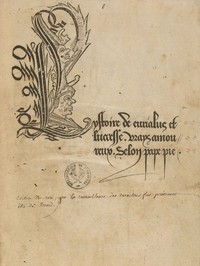
L'Ystoire de Eurialus et Lucresse, vrays amoureux, selon pape Pie by Pope Pius II
Ever wondered what a Pope thinks about forbidden love? L'Ystoire de Eurialus et Lucresse gives you a direct line to one man's surprisingly complicated thoughts on the subject. Written by Aeneas Silvius Piccolomini before he became Pope Pius II, this short novel from the 1440s tells a story that feels both ancient and strikingly familiar.
The Story
The plot is a classic setup. Eurialus, a German knight, arrives at the court of an Italian prince. There, he meets Lucretia, a beautiful and intelligent noblewoman. The problem? They're both already married to other people. What follows isn't a grand epic, but an intimate, anxious portrait of a secret affair. The story moves through whispered conversations, letters passed by trusted servants, and brief, dangerous moments stolen in gardens and shadowy rooms. The central tension isn't about battles or magic, but about the constant, gnawing fear of discovery and the social ruin that would follow. It's a love story where the biggest enemy is the clock and the ever-present eyes of the court.
Why You Should Read It
What makes this book special is the voice behind it. You're not just reading a medieval romance; you're reading a Pope's first draft on human desire. There's a fascinating tension throughout. The narrator clearly sympathizes with the lovers' passion and their clever schemes to be together. He paints their emotions vividly. But then, almost like a reflex, he'll pull back and remind you (and maybe himself) that what they're doing is a sin. It feels personal, like watching someone think out loud about a conflict between heart and doctrine. The characters aren't deep by modern standards, but their situation is painfully real. You get caught up in their hope with every successful secret meeting and share their dread with every close call.
Final Verdict
This isn't a beach read. It's a niche, historical curiosity that packs a punch. It's perfect for history buffs who want to move beyond dates and battles into the mind of a major figure, or for literature lovers interested in the early roots of the novel and psychological drama. If you enjoy stories about impossible love, like Romeo and Juliet, but want to see a much earlier, more morally tangled version from a truly unique author, give this a try. You'll finish it in a sitting, but you'll be thinking about that authorial voice—the future Pope, wrestling with a good story about a bad thing—for much longer.
Legal analysis indicates this work is in the public domain. Access is open to everyone around the world.
David Rodriguez
1 year agoI was skeptical about the depth of this book at first, but the insights into future trends are particularly thought-provoking. I'm glad I chose this over the other alternatives.
Susan Robinson
1 year agoThe fonts used are very comfortable for long reading sessions.
Donald Thompson
1 year agoA must-have for anyone studying this subject.
Linda Johnson
1 year agoI came across this while browsing and it manages to explain difficult concepts in plain English. Don't hesitate to start reading.





Ashley Anderson
9 months agoFrom a researcher's perspective, the concise summaries at the end of each section are a lifesaver. This is a solid reference for both beginners and experts.