
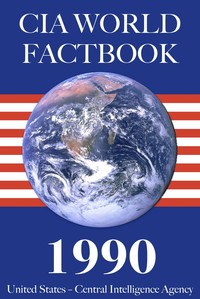
The 1990 CIA World Factbook by United States. Central Intelligence Agency
Let's be clear from the start: this isn't a storybook. There's no protagonist, no villain, and no plot twist—unless you count geopolitics. The 1990 CIA World Factbook is exactly what it sounds like: a reference guide. The CIA compiled profiles for every recognized country, packed with data on population, government type, economy, and military strength. It reads like a global encyclopedia written by spies.
The Story
There isn't a traditional narrative. Instead, the 'story' is the state of the world in 1990. You flip from the massive, struggling economy of the USSR to the tiny GDP of a Pacific island nation. You see West Germany and East Germany listed as separate entries. Apartheid is still the law in South Africa. Yugoslavia is one country. It's a complete, dry, and clinical overview of national statistics, presented without commentary or prediction. The drama is all in the context the book itself lacks—we know this is the last edition before the world map was redrawn.
Why You Should Read It
This book fascinated me because of its eerie calm. Reading it with today's knowledge is a surreal experience. The analysts note the Soviet Union's economic troubles but give no hint of its imminent collapse. It presents a stable, two-superpower world that was about to evaporate. It's a masterclass in how even the best information can't always predict the future. I found myself reading between the lines, looking for clues they might have overlooked. It turns raw data into a kind of historical thriller, where you, the reader, know the ending that the authors didn't.
Final Verdict
This is a niche pick, but a brilliant one for the right reader. Perfect for history buffs, map geeks, and anyone obsessed with the late Cold War. It's not a page-turner you read cover-to-cover. It's a book to dip into, to compare past data with present reality, and to marvel at how much can change in a single decade. If you've ever looked at an old map and wondered 'what did people think back then?', this book is your answer. Approach it as a primary source, not a story, and you'll be rewarded with a unique and perspective-shifting experience.
There are no legal restrictions on this material. It serves as a testament to our shared literary heritage.
Donald Thomas
1 year agoClear, concise, and incredibly informative.
Joseph Garcia
2 months agoI particularly value the technical accuracy maintained throughout.
Margaret Jackson
4 months agoFrom a researcher's perspective, the critical analysis of current industry standards is very timely. I appreciate the effort that went into this curation.
Jennifer Wright
1 year agoI have to admit, the content flows smoothly from one chapter to the next. Thanks for sharing this review.
Ashley Brown
8 months agoI found the author's tone to be very professional yet accessible, the wealth of information provided exceeds the average market standard. Top-tier content that deserves more recognition.