
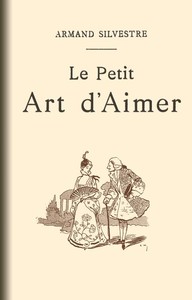
Le Petit Art d'Aimer by Armand Silvestre
First, let's clear something up: this isn't a romance novel. Published in 1880, Le Petit Art d'Aimer (The Little Art of Loving) is a social guidebook. Armand Silvestre, a poet and man-about-town in Parisian literary circles, decided to write down the unofficial rules of love and flirtation as practiced in his society.
The Story
There's no traditional plot with characters. Instead, Silvestre acts as your narrator, walking you through the stages of a romantic pursuit. He breaks it down into 'lessons' or observations. He talks about the first glance, the art of conversation, the importance of the chaperone, the use of flowers and letters, and the delicate dance toward a declaration. He outlines strategies for both men and women, often highlighting the unspoken power dynamics and the theatricality required. The 'story' is the journey of a courtship itself, presented as a game with very specific, if absurd, rules.
Why You Should Read It
What makes this book so fun is its tone. Silvestre writes with this delightful mix of authority and mischief. You can never be quite sure if he's earnestly passing on wisdom or pulling your leg by exposing the silliness of it all. When he gravely advises on the precise timing of a sigh or the strategic deployment of a fan, it's impossible not to laugh. It's a brilliant snapshot of a specific social world—the gossip, the constraints, the hidden languages people used to communicate under the watchful eyes of society. Beyond the humor, there's a real, almost melancholy insight about how hard it was to be authentic when every move was a performance.
Final Verdict
This is a perfect little book for a curious reader. It's for anyone who loves historical nonfiction that feels like eavesdropping, or fans of witty social commentary like Jane Austen's narration. If you enjoy podcasts or articles about the strange customs of the past, you'll devour this. It's also a great pick for a book club—there's so much to discuss about how courtship has (and hasn't) changed. Just don't go in looking for a sweeping love story. Go in looking for a chat with a clever, slightly cynical 19th-century friend who has all the best gossip on how the game was played.
This digital edition is based on a public domain text. It is available for public use and education.
Kimberly Williams
5 months agoThis was exactly the kind of deep dive I was searching for, the way it handles controversial points with balance is quite professional. This adds significant depth to my understanding of the field.
David Garcia
1 month agoWhile browsing through various academic sources, the level of detail in the second half of the book is truly impressive. I feel much more confident in my knowledge after finishing this.
Jessica Lee
1 month agoInitially, I was looking for a specific answer, but the nuanced approach to the central theme was better than I expected. I feel much more confident in my knowledge after finishing this.
Patricia Garcia
5 months agoI started reading this with a critical mind, the practical checklists included are a great touch for real-world use. An excellent example of how quality digital books should be formatted.








Matthew Wilson
9 months agoI appreciate how this edition approaches the core problem, the data points used to support the main thesis are quite robust. I'm glad I chose this over the other alternatives.